

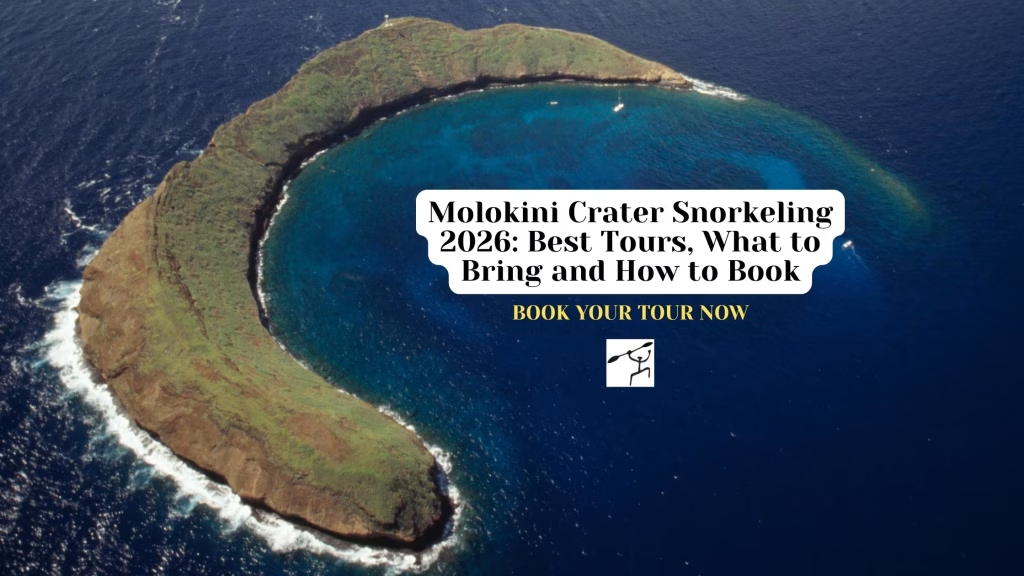
Molokini Crater is one of the most legitimately impressive snorkel spots in the entire Pacific — a partially submerged volcanic crater floating 2.5 miles off Maui’s south shore, with water so clear you can see the sandy bottom at 70 feet like you’re looking through a window. If you’re heading to Maui in 2026 and snorkeling is anywhere on your radar, a Molokini tour deserves serious consideration but the gap between a great experience and a forgettable one comes down almost entirely to which operator you pick and what time you leave the dock.
Quick Answer: Is Molokini Worth It in 2026?
- Yes — visibility regularly hits 150 feet inside the crater, which is rare anywhere in Hawaii
- Go early — 7 or 8 AM departures are the only ones worth booking
- Budget realistically — quality tours run $130–$200 per adult, and the cheap ones cut corners
- Top operators — Trilogy Excursions, Pride of Maui, Lani Kai, and Maui Adventure Tours Kayak Co. are the names that keep coming up for good reason
- Know your stomach — the 2.5-mile open-water crossing is no joke on a rough morning
At a Glance: Molokini Crater Snorkeling 2026
| Detail | Info |
|---|---|
| Location | 2.5 miles offshore from Maalaea Harbor |
| Depth inside crater | 10–70 feet depending on zone |
| Visibility on good days | Up to 150 feet |
| Departure points | Maalaea Harbor, Kihei Boat Ramp |
| Best months | April through October |
| Typical tour price | $130–$200 per adult |
| Tour duration | Around 4–5 hours total |
| Governing body | Hawaii DLNR — permit required for all operators |
What Actually Makes Molokini Crater Different From Every Other Snorkel Spot on Maui?
Here’s the thing about Maui snorkeling there are good spots and there are genuinely great spots, and most people can’t tell the difference until they’ve been to both. Kamaole Beach Park is perfectly fine. Ahihi-Kinau Natural Area Reserve down near La Perouse Bay is better. But Molokini sits in a different category entirely, and the reason comes down to one word: protection.
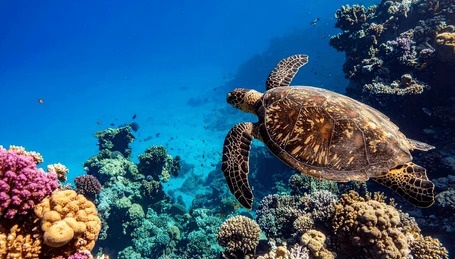
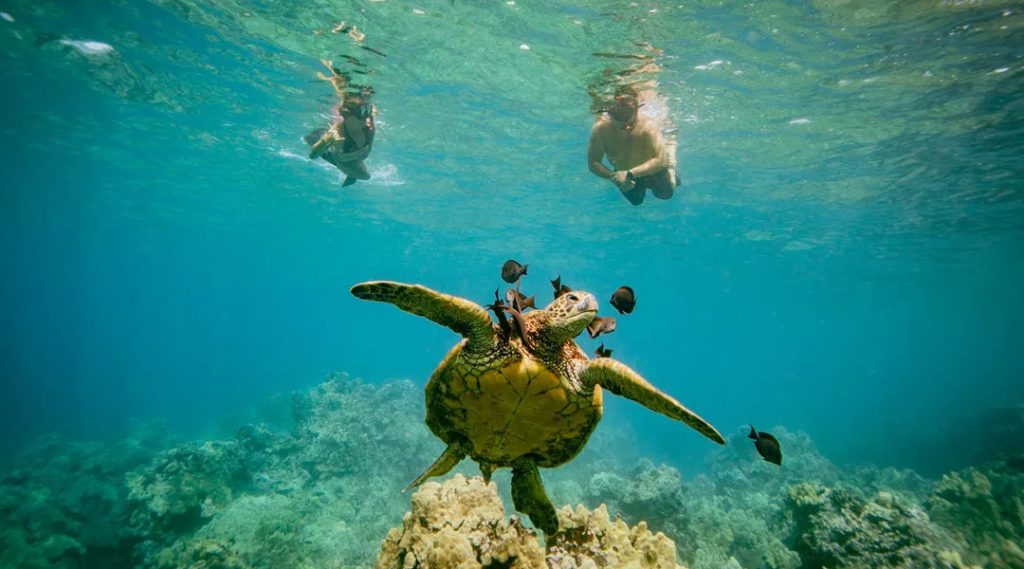
The crater has been a State Marine Life Conservation District since 1977. That’s nearly 50 years with no fishing, no coral collecting, and no anchoring directly on the reef. What that does to a marine ecosystem over that kind of time is remarkable. The fish here don’t scatter when you approach them. Parrotfish will pass a foot from your face and keep feeding like you’re not there. A green sea turtle might cruise directly underneath you and not change course. You get that kind of indifference from wildlife only when generations of animals have grown up without being hunted or chased.
The geology matters too. The crater bowl acts like a natural windbreak. While the channel outside can be choppy and the surface texture rough, inside the crater the water tends to flatten out, especially early in the morning. That flat, clear water combined with minimal silt there’s no runoff out here, no river sediment, nothing to cloud things up produces that famous Molokini visibility. On a calm July morning, 150 feet of visibility is not an exaggeration.
The back wall of the crater is a different conversation. It drops from the surface straight down past 300 feet and is one of the more dramatic dive sites in Hawaii. Snorkelers stay inside the bowl, but if you’re a certified diver, ask your operator whether back-wall access is part of the package. Some offer it as an add-on; others don’t permit it at all.
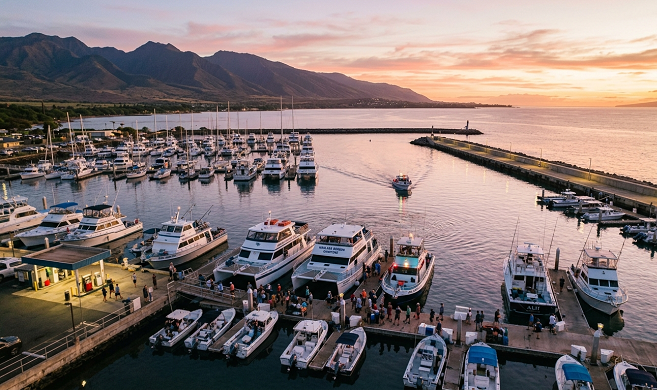
One thing worth saying plainly: by 10 AM, Molokini can feel like a crowded reef. The state issues permits to multiple operators, and on a busy summer Saturday, you might share the water with 200 people across a dozen boats. The snorkeling is still good but the fish don’t disappear because of crowd pressure the way they would at a shore-accessible spot. But the atmosphere changes. That peaceful, otherworldly feeling you get when you drop in at 7:30 AM is genuinely harder to access at 10:30.
Molokini sits at the top of any serious list of the best snorkeling spots on Maui, but understanding why requires seeing how it compares to the island’s other strong options.
Which Molokini Snorkel Tour Is Actually Worth Your Money in 2026?
Most review sites will list six operators and refuse to say anything critical about any of them. That approach helps nobody. Here’s an honest breakdown of who’s worth booking, what you actually get, and where the differences matter.
Trilogy Excursions
Trilogy has been running boats out of Maui since 1973, and their reputation is not accidental. They keep group sizes small typically 24 to 48 passengers depending on the vessel and their crew tends to include people who genuinely know the reef, not just staff reading from a laminated card. Breakfast and a deli lunch are included. Gear is well-maintained. The whole experience feels like someone thought carefully about what a good day on the water should look like.
The price reflects all of that. You’re looking at $185–$200 per adult, which is the highest end of the market. If that’s within your budget, it’s money well spent. If it’s a stretch, the next two options are honest alternatives.
Pride of Maui
Pride of Maui runs a larger catamaran up to 100 passengers and that’s how they keep prices at $140–$160 per adult. The trade-off is real: a bigger boat means a louder, busier experience. But the crew is solid, the itinerary is well-designed, and they routinely pair Molokini with a Turtle Town stop on the return trip, which adds genuine value. If you’re traveling with a mixed group some who care deeply about the snorkeling, others who just want a fun morning, Pride of Maui handles that mix well.
Lani Kai
Lani Kai is the one locals tend to recommend when someone asks for a small-group option that won’t break the bank. They cap the boat at around 24 guests, and the guides seem to take real pride in marine identification the kind of guide who’ll point out a leaf scorpionfish sitting motionless on a rock and explain exactly why you would have missed it without help. Price runs $175–$195. Not the cheapest, but the quality-to-cost ratio is strong.
Maui Adventure Tours Kayak Co.
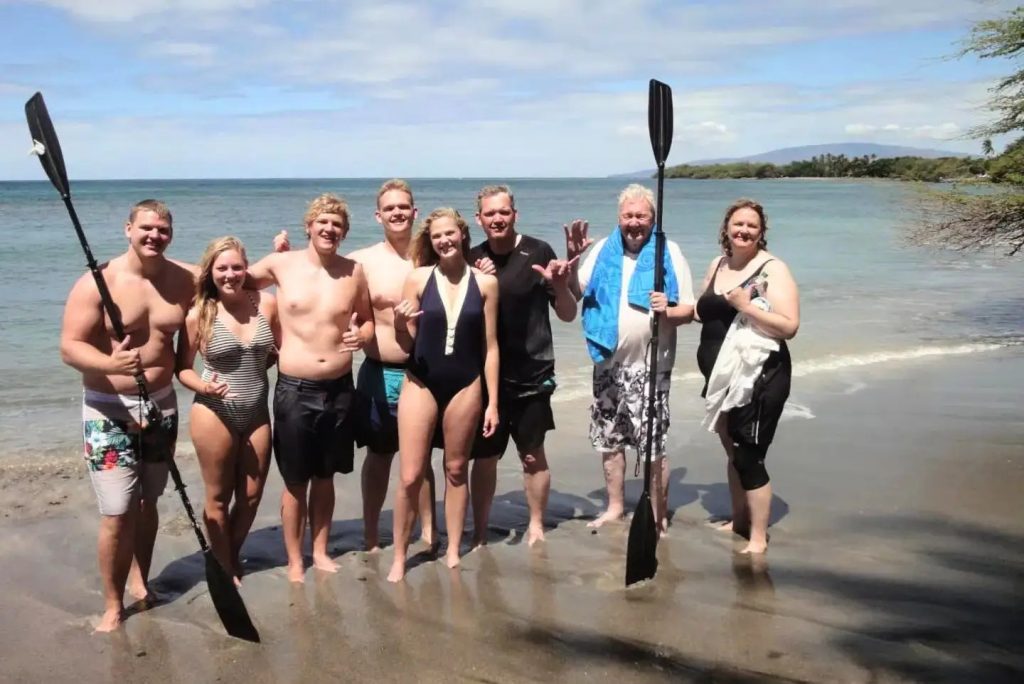
If you want to experience Maui’s waters from a completely different angle, Maui Adventure Tours Kayak Co. offers something the larger catamaran operators don’t a more intimate, human-powered alternative for exploring South Maui’s coastal waters. Their sea kayak and snorkel tours put you low on the water, close to the reef, and in genuinely small groups. While they don’t run the offshore Molokini crossing by kayak (the open channel is too exposed for that), Their kayak and snorkel tours along West Maui’s Olowalu coastline are an excellent complement to a Molokini boat tour or, if stepping onto a big catamaran isn’t for you, their Shoreline Snorkel at Turtle Reef offers guaranteed sea turtle sightings in calm, sheltered water without a single wave of open-ocean crossing or a strong standalone option if seasickness is a real concern. Their guides know South Maui’s marine terrain well, and the pace is unhurried in a way that big-boat tours simply can’t replicate. Worth checking their 2026 schedule directly, as offerings and departure points can shift seasonally.
What to Walk Away From
Any tour departing after 9 AM, any operator that won’t tell you the boat capacity upfront, and any listing where the price dips dramatically below $120 without a clear explanation of what’s been removed. Some operators use Molokini as a headline and run an experience that doesn’t match it. The tell is usually vague language in the listing and no mention of group size.
Molokini vs. Turtle Town: Which One Should You Actually Do?
People treat this like a competition, but it really isn’t they’re just different experiences with different strengths.
Molokini is about clarity, marine density, and that particular feeling of floating above a reef that’s been protected for decades. The fish are abundant and relaxed. The visibility is extraordinary. You’re in open ocean to get there, which either adds to the adventure or is a genuine problem depending on your relationship with boat travel.
Turtle Town is a nickname for the reef system stretching between Makena Landing and the area near Black Sand Beach off Makena. It earns its name — green sea turtle sightings there are about as close to guaranteed as anything gets in wild-animal terms. The visibility is lower than Molokini, usually sitting between 40 and 70 feet, and the coral isn’t as dramatic. But the water is calmer because you’re not crossing an open channel, and the overall experience is more accessible for families, younger kids, and anyone who isn’t comfortable with open-ocean swells.
The best answer and the one most people overlook is to do both in one trip. Maui Adventure Tours builds this into their standard itinerary, and several other operators offer the same combination. You hit Molokini early when conditions are optimal, then swing by Turtle Town on the return when the sea has typically settled and the light is different. Two completely different environments in a single half-day. For most people planning Maui snorkeling tours in 2026, that combo format is the smartest way to structure it.
Before you choose, it’s worth reading up on where to see turtles in Maui including which spots offer the most reliable sightings and how to approach them respectfully.
How to Book a Molokini Tour Without Getting Burned
There’s a version of this process where you spend $160 per person, show up at the dock, and realize you booked a reseller who added 20% to the price while providing zero additional service. Here’s how to avoid that.
Book Direct, With One Exception
For Trilogy, Pride of Maui, Lani Kai, and Maui Adventure Tours Kayak Co., go directly to their websites. Direct booking typically matches or beats third-party pricing, gives you cleaner cancellation terms, and puts you in direct contact with the operator if something changes. Third-party platforms like Viator or GetYourGuide have their place mainly if they’re running an actual discount that undercuts the direct price, which does occasionally happen. Compare both before paying.
Step-by-Step: How to Book a Molokini Tour That Delivers
- Lock your dates before anything else. Summer 2026 tours, June through August especially fill up 4 to 6 weeks out. This is not the kind of thing to sort the night before.
- Pick your operator based on group size preference, budget, and whether a combo itinerary matters to you.
- Choose the earliest departure available. Seven or eight in the morning. That’s it. That’s the window.
- Read what’s actually included. Gear, instruction, food, and a naturalist guide should all be part of any tour worth paying for.
- Check the cancellation policy line by line. Most solid operators give you free cancellation 48 to 72 hours out. If weather cancels the tour on their end, you want a clear refund or reschedule path.
- Plan your parking. Maalaea Harbor has parking but it fills up. Arrive 30 minutes before your departure, not 10.
Pay by Credit Card, Always
If a tour gets weather-canceled and the operator can’t fit you into another departure before you leave Maui, a credit card with travel purchase protection gives you a fallback. Cash and Venmo don’t.
What to Bring Snorkeling in Maui: The Molokini-Specific Packing List
Generic snorkel packing lists are mostly noise. This one is built around an early-morning half-day boat tour specifically.
Bring these:
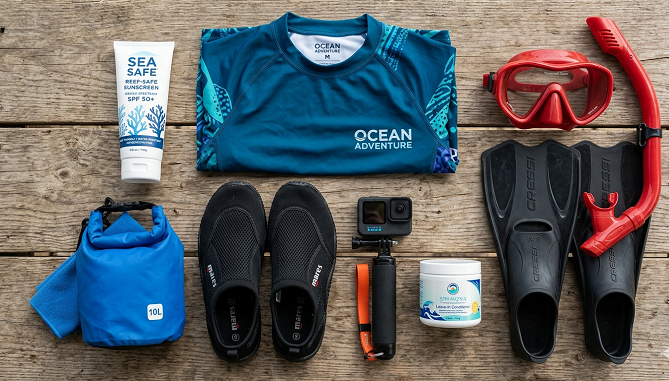
- Reef-safe mineral sunscreen — Hawaii banned oxybenzone and octinoxate sunscreens under Act 104, which took effect in 2021. Crew members will check, and rightfully so. Bring mineral SPF or just wear a rash guard and use less of it.
- A rash guard or thin wetsuit top — Water at Molokini sits around 75–78°F in summer. That sounds warm until you’ve been floating facedown in it for an hour. A rash guard solves the sun problem and the cold problem at once.
- Motion sickness medication — Take it the night before and again the morning of. Not 20 minutes before you board. Dramamine, Bonine, and prescription scopolamine patches all work. The crossing can be rough, and there is nothing good about discovering you needed this medication once you’re already mid-channel.
- An underwater camera — A basic GoPro is genuinely enough here. The visibility makes even average footage look exceptional. Leave the bulky DSLR unless it’s in a housing rated for 30-plus feet.
- Water shoes or sandals — Dock entry and boat ladder exit are easier with some grip on your feet.
- A light jacket or windbreaker — Maalaea Harbor mornings are often cold before the sun comes up properly. The boat ride out is windier than you expect.
What the tour operator should be providing:
- Mask, fins, and snorkel (ask whether gear is sanitized between uses — good operators have a cleaning protocol)
- Flotation noodles or vests for people who want them
- Beginner snorkel instruction on board before you enter the water
- Food and drinks on any full-service tour
Leave at the hotel:
- Jewelry and valuables boat lockers exist but aren’t secure enough for anything that matters
- Any camera gear without proper waterproof protection
When Is the Best Time to Go to Molokini Crater?
The short answer is April through October, with summer sitting at the top of that range. Here’s why that window makes sense.
Maui’s south shore is somewhat sheltered from the north and northwest swells that define Hawaii’s winter surf season. But between November and March, Southern Ocean swells generated by distant storm systems can still push enough water around to make the Molokini channel genuinely uncomfortable and occasionally dangerous enough that operators cancel tours entirely. If you’re traveling in winter, it’s smart to build a buffer day into your itinerary specifically so you can reschedule if weather scrubs your tour.
In summer, water temperatures climb to 78–82°F, seas are calmer on most days, and visibility inside the crater is at its annual peak. The trade-off is crowds. July and August are when Molokini is busiest, both in terms of tourists and the number of permitted boats in the crater simultaneously.
Tuesday through Thursday tend to run slightly less crowded than weekend departures not dramatically, but noticeably at peak times. And time of day matters more than day of week. An 8 AM Wednesday departure beats a 10 AM Saturday departure in almost every measurable way: fewer boats, calmer water, better light for seeing into the reef, and fish that haven’t been spooked by three hours of snorkelers already.
For a deeper breakdown of how Maui’s seasons affect water conditions, visibility, and marine wildlife, the best time to snorkel in Maui guide covers all the variables month by month, shore-by-shore.
FAQ: Molokini Crater Snorkeling — Real Questions, Straight Answers
Is Molokini Crater snorkeling actually worth the money in 2026?
For most people, yes — genuinely yes, not travel-brochure yes. The visibility and marine life density are hard to find anywhere else in Hawaii, and the protected-crater environment creates conditions you can’t replicate at a beach entry. The experience is meaningfully different from anything you’ll do on shore. Whether it justifies $150–$200 per adult depends on your budget, but very few people come back from Molokini saying it wasn’t worth it.
How far offshore is Molokini, and can you get there by kayak?
Molokini sits 2.5 miles offshore from the Maalaea Harbor area. You cannot reach it by kayak, paddleboard, or private boat without a permit — it’s accessible only through licensed commercial operators. The crossing covers open ocean, which is part of why early departures matter so much.
Can first-time snorkelers handle Molokini?
Yes, with reasonable confidence. The water inside the crater is calm, the main snorkel area is 10 to 40 feet deep, and every reputable operator provides flotation equipment and on-board instruction before anyone enters the water. You don’t need to be a strong swimmer, but being comfortable floating in open water helps. If you’ve never snorkeled before, mention it when you book — good operators will pair you with a guide in the water.
What marine life can you actually expect to see?
Green sea turtles are common. Reef whitetip sharks rest on the sandy bottom and are visible on most dives. Moorish idols, raccoon butterflyfish, parrotfish, and large schools of Hawaiian sergeant fish are regular sightings. The humuhumunukunukuapua’a — Hawaii’s official state fish — shows up reliably. Spinner dolphins occasionally pass through the crater, though that’s a bonus rather than a guarantee.
How much does a Molokini tour cost in 2026?
Expect to pay between $130 and $200 per adult for a quality experience. Operators on the lower end of that range are typically running larger boats with more passengers. The higher-priced options Trilogy, Lani Kai offer smaller groups, better gear, and more attentive guides. Children usually get a 20 to 30 percent discount. Add a few dollars for Maalaea Harbor parking on top of the tour price.
Should I take seasickness medication even if I don't usually get motion sick?
It’s worth taking seriously. The 2.5-mile crossing goes over open ocean, and the water texture can surprise people who have no history of motion sickness at all. The medication works significantly better when it’s already in your system take it the night before and the morning of, not when you’re already feeling off. A bad crossing can genuinely ruin the experience; a smooth one makes the whole day.
What is the cancellation policy if weather closes the tour?
Most established operators cancel in advance when conditions are unsafe and offer a full refund or a reschedule. Free cancellation for traveler-initiated changes typically runs 48 to 72 hours before departure. Read the specific policy before booking, because it varies by operator, and always pay by credit card so you have purchase protection as a backup.
Is Molokini too crowded to enjoy?
It depends almost entirely on when you go. Early morning 7 to 8 AM the crater is quiet, the water is flat, and you can have sections of reef largely to yourself. By 10 AM on a peak summer day, there may be 10 or more boats moored in the crater with hundreds of snorkelers in the water. The marine life quality doesn’t drop dramatically with crowd size, but the experience does. Book early, go early, and you’ll understand why people rave about this place.
Bottom Line
Molokini Crater snorkeling in 2026 is worth planning carefully for the visibility, the fish life, and the sheer weirdness of floating inside an ancient volcanic crater are not things you experience at a beach. Book the earliest departure you can find, choose an operator that keeps group sizes honest, take the motion sickness medication before you think you need it, and don’t let anyone talk you into a mid-morning tour to save thirty dollars. Do it right and Molokini Crater snorkeling 2026 becomes the experience you’re still describing to people five years from now.








6 Comments
Enjoy every single day
Enjoy every single day