


I’m going to be honest with you from the start — I almost missed my own Haleakalā sunrise because I assumed getting in would be easy. It’s not. There’s no winging it, no asking the hotel front desk to pull strings, and definitely no showing up and hoping for the best. You either locked down a vehicle reservation through Recreation.gov ahead of time, or you’re watching the sky change color from a gas station parking lot somewhere below the clouds.
Here’s the full picture everything I wish someone had just told me plainly before I went.
Quick Answer: Haleakalā Sunrise Reservations 2026
- Where to book: Recreation.gov (search “Haleakalā Sunrise”)
- When tickets drop: 7:00 a.m. HST, exactly 60 days before your target date — and again 48 hours out
- Cost: $1.00 reservation fee per vehicle + separate park entry fee (~$30 per vehicle)
- Valid hours: Your reservation covers entry between 3:00 a.m. and 7:00 a.m. only
- One per customer: Each Recreation.gov account can book one reservation every three days
Haleakalā Sunrise 2026 — At a Glance
| Detail | Info |
|---|---|
| Summit Elevation | 10,023 feet (3,055 m) |
| Reservation Required | Yes — 3:00 a.m. to 7:00 a.m. daily |
| Booking Window | 60 days ahead + 48 hours ahead, at 7:00 a.m. HST |
| Reservation Fee | $1.00 per vehicle (non-refundable) |
| Park Entry Fee | ~$30 per vehicle (separate, paid at gate or online) |
| Summit Temperature | 30°F to 65°F — at least 30°F colder than sea level |
| Summer Sunrise Time | Approximately 5:45–6:00 a.m. |
| Winter Sunrise Time | Approximately 6:45–6:55 a.m. |
| No-reservation option | Sunset — no booking required, equally stunning |
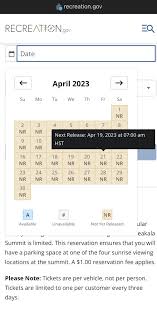
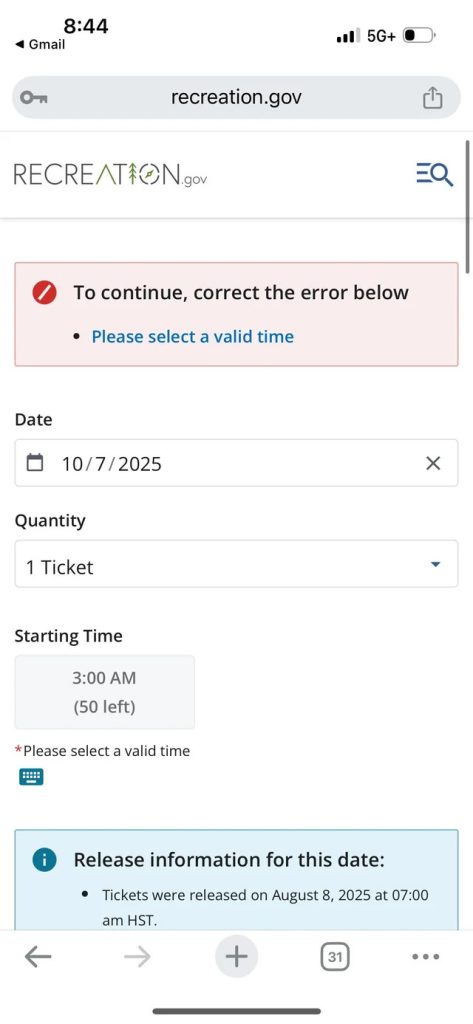
How to Book a Haleakalā Reservation in 2026 (Step-by-Step)
Here’s the thing nobody really prepares you for the booking process itself is fast, almost shockingly fast, and not in a good way. Summer weekends? Gone in four minutes. Holiday dates like July 4th? Sometimes under two. I’ve talked to people who had three browser tabs open, a timer running, and still missed it because they hadn’t saved their payment info.
So let’s do this right.
Start with your Recreation.gov account — today, not the morning of. Go in right now, fill out your name, address, vehicle information, and drop in a valid payment method. Save everything. When the booking window opens, you want to be clicking “confirm,” not typing your credit card number while dates vanish off the screen.
Do the 60-day math carefully. This isn’t flexible — tickets drop exactly 60 days before your target date at 7:00 a.m. Hawaii Standard Time. Going July 15, 2026? That’s May 16th at 7:00 a.m. HST. Put it in your phone calendar right now, with an alarm. Put it in your partner’s phone too.
Be sitting on the Haleakalā Sunrise Ticket page before 7:00 a.m. — not at 7:00 a.m. Load the page at 6:58. Sit there. Refresh at 6:59:50. The available dates flip live when the window opens and the popular ones are gone almost immediately. Navigating over from a Google search at 7:02 a.m. is too late. I’ve seen it happen.
Decide upfront whose name goes on the reservation. This matters more than people realize — the person named on the booking has to be physically present at the gate with a matching photo ID. If your travel partner books it and then decides to sleep in, you’re not getting through. Settle this before anyone touches the keyboard.
The 48-hour window is real and worth knowing about. The park holds back a chunk of tickets and releases them exactly 48 hours before each date, again at 7:00 a.m. HST. If you struck out at the 60-day mark, this is your second shot. Set another alarm. Same urgency, smaller batch, but genuine availability does show up.
The reservation fee and park entry fee are two separate things. Your $1.00 reservation through Recreation.gov is just the reservation. The ~$30 vehicle entry fee is collected separately — either at the gate or you can pay it in advance online, which I’d recommend because paying at the gate at 4:00 a.m. while tired and cold isn’t how you want to start your morning.
Download your confirmation before you leave for the summit. Cell service dies somewhere around 7,000 feet and doesn’t come back. Screenshotting your confirmation, saving it offline, whatever works for you — just make sure you can show it without needing a signal. The gate ranger isn’t going to wait while you try to load your email.
Last thing: Recreation.gov limits each account to one vehicle reservation every three days. If you and your partner want to lock down a backup date too, have them create their own separate account and go after a different day. It’s the smart move and completely allowed.
What Is the Haleakalā Summit Temperature at Sunrise?
Let me paint you a picture, because this is where most first-timers get genuinely blindsided.
You wake up at 2:30 a.m. in Wailea. It’s 77°F outside. You throw on a light jacket because you figure, hey, it’s Hawaii. You drive two hours up the mountain, step out of the car into darkness at 10,023 feet, and immediately feel a cold you were not prepared for. The wind is cutting across the summit. Your ears hurt. Your hands are already stiff. You’ve got 45 minutes until sunrise.
That’s a real scenario. I’ve watched it happen to people standing near me at the overlook.
Summit temperatures before dawn run anywhere from 30°F to 65°F. Most mornings you’re looking at somewhere around 40°F before the sun comes up, and wind chill pushes it lower. Even in the middle of summer July, August, peak beach weather down below the summit at 3 a.m. feels like a raw November morning somewhere in the Rockies. The altitude thins the air enough that your body loses heat faster than you’d expect, and once the wind picks up it’s relentless.
Wear this and I mean actually wear it, not pack it in the car:
- A proper down jacket or heavy fleece with real insulation. Not a windbreaker. Not a zip-up hoodie. Something that actually holds heat.
- Long pants. Jeans are fine. Athletic pants are not — they offer nothing when the wind gets going.
- Closed-toe shoes with wool or synthetic socks. Not sandals. Not slip-ons.
- A hat that covers your ears. This is non-negotiable.
- One extra layer you can peel off once the sun is actually up and the temperature starts climbing.
- A blanket from your hotel room. Seriously — this is the tip I almost never see written anywhere, and it makes a massive difference. Wrap it around yourself while you wait. People will be jealous.
Throw some snacks in your bag and fill a thermos with coffee before you leave if you can. There is no food sold anywhere inside the park, no coffee shop, nothing. You’re standing in the cold for up to 90 minutes before the sun rises, and being hungry on top of everything else is just unnecessary suffering.
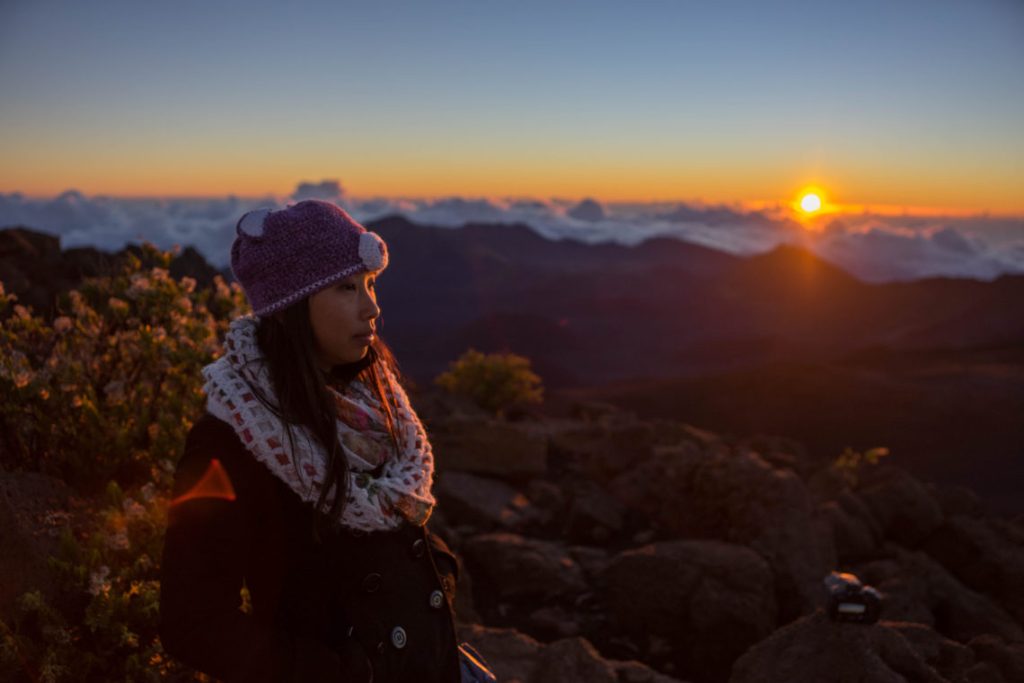
Is the Haleakalā Sunrise Worth It? An Honest Answer
Short answer: yes, genuinely yes — but let me give you the version with the edges left on.
Mark Twain stood at this same summit back in the 1800s and called it “the sublimest spectacle I ever witnessed.” That quote keeps circulating not because it’s good marketing but because it’s still accurate. When the light starts moving across the crater floor and the ocean below you turns from black to gold and you realize you’re standing above the clouds looking down on an island yeah. It’s one of those moments that doesn’t really translate into a photograph. You have to be there.
But here’s what the travel content tends to gloss over:
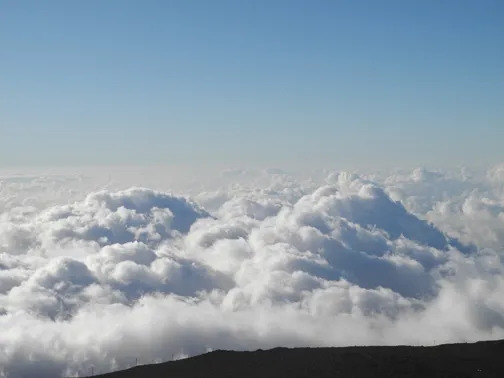
The clouds don’t care about your alarm clock. The summit gets completely fogged in on perfectly random mornings with no warning and no pattern. When that happens, you watch a gray sky slowly get lighter. It’s still something, but it’s not what you drove up a mountain at 3 a.m. for. Reservation fees are non-refundable regardless of weather that’s just the deal. Check the NOAA zone forecast for Haleakalā Summit the night before and make peace with the fact that the mountain has the final word.
The drive up is genuinely intense. Two hours in the dark on narrow switchback roads with no streetlights, coming off whatever sleep you managed to get before a 2:30 a.m. alarm. If your offline maps aren’t already downloaded before you leave and they need to be, because your phone has no signal above 7,000 feet you’re navigating blind. Plan for it.
You will be surrounded by people. Hundreds of people hold reservations for the same morning you do. The visitor center is crowded. The overlook is packed shoulder to shoulder. If you’re going hoping for a private moment with the universe, that’s not quite what this is. It’s communal — more like being in a crowd at a stadium when something incredible happens, where the shared reaction becomes part of the memory.
If you’re still in the planning phase and wondering whether Maui is worth a trip in the first place, check our guide to visiting Maui safely in 2026 it covers what’s changed, what’s fully open, and what to expect on the ground.
The bottom line I’d actually give a friend: if the forecast looks clear, go without hesitation. Dress properly, stay at the overlook for at least 15 minutes after the sun fully clears the horizon, and let the colors across the crater do their thing. You’ll be glad you went.
How Early Should You Arrive at Haleakalā for Sunrise?
Get to the visitor center at least 75 minutes before sunrise and that’s not a cushion, that’s a real target with a real reason behind it.
The upper summit parking lot is small. When it fills up, rangers close the entrance and you’re walking a quarter mile uphill from the visitor center in the dark and the cold. That’s not a disaster, but it’s also not what you want after a two-hour drive at 3 a.m. Arriving with 75 minutes to spare usually means you get a spot. Cutting it to 30 minutes is a gamble I wouldn’t take.
One more thing worth taking seriously: the summit is genuinely remote, and emergency medical assistance is at least an hour away from up there. If anyone in your group has asthma, a heart condition, or has had altitude issues before, factor that into your planning. Going from sea level to 10,023 feet overnight does affect some people not most, but enough that it’s worth knowing.
Here’s a rough timeline based on where you’re staying on Maui:
- Kihei / Wailea: Out the door by 3:00–3:15 a.m.
- Lahaina / Ka’anapali: Leave by 2:30–3:00 a.m.
- Pa’ia / North Shore: You’ve got until about 3:15–3:30 a.m.
- Hāna: Hāna: Not practical for sunrise unless you’re staying Upcountry. If you’ve just done the Road to Hana, plan an Upcountry overnight rather than trying to drive the summit from the east side at 2 a.m.
Use the restrooms at the Haleakalā Visitor Center at 9,740 feet before you make the walk up to the summit overlook. There are no facilities at the top, and you don’t want to be solving that problem in the dark at 5:45 a.m.
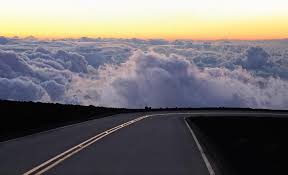
What Happens If You Can't Get a Haleakalā Sunrise Reservation?
Don’t spiral. You’ve got two legitimate options, and one of them might actually be better than what you missed.
Option one: the 48-hour release. Forty-eight hours before your target date, at exactly 7:00 a.m. HST, the park releases a second batch of held-back reservations. It’s a smaller pool than the 60-day drop, but real tickets show up. Set your alarm, be on the page before 7:00 a.m., same approach as before.
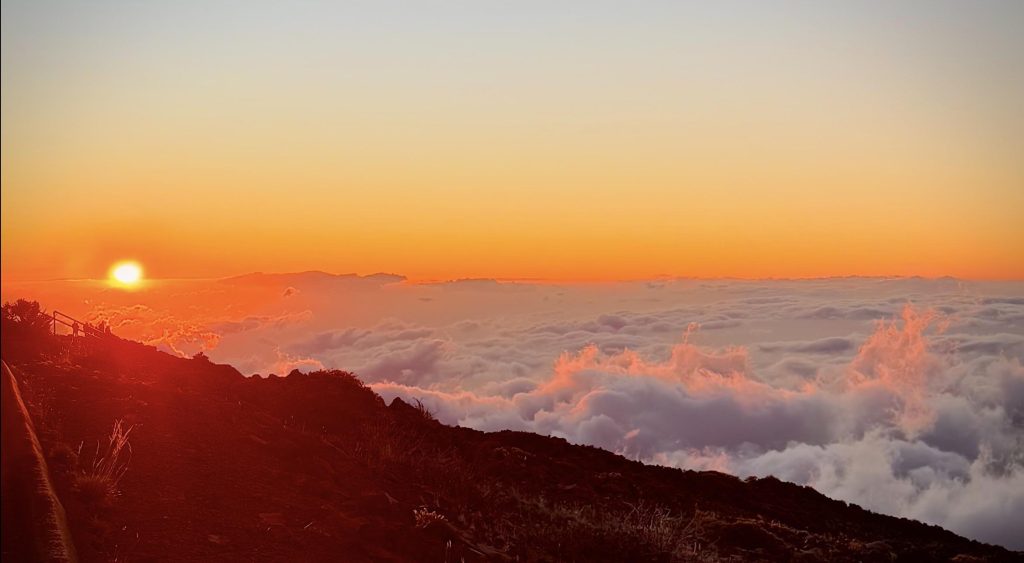
Option two: sunset. I know that sounds like I’m just telling you to feel better about missing sunrise, but I genuinely mean it Haleakalā at sunset is stunning, it requires zero reservation, and it comes with none of the 2:00 a.m. alarm clock misery. The temperature is reasonable. The crowds are a fraction of what they are at sunrise. And after the sun goes down, you’re standing at 10,000 feet above all the light pollution on Maui with the Milky Way coming out overhead. That’s not a backup. That’s a whole different kind of extraordinary.
If you’re visiting between October and February, honestly the sunset colors from that summit can match or beat what sunrise delivers. Drive back down, have dinner somewhere in Pa’ia, and use the next morning rested, warm, and relaxed for a kayak and snorkel tour at Olowalu Reef on the West Shore. That’s a two-day Maui combination that actually makes sense.
Haleakalā National Park Tips Most Guides Skip
Most of this stuff I learned either the hard way or from talking to rangers and locals who’d watched tourists make the same mistakes over and over.
Gas up the night before in Kahului or Pukalani. There is no gas on the road up, no gas at the park, no gas at the summit. Running low at 2:00 a.m. on a dark mountain with no service is not a situation you want to improvise your way out of.
The coldest window is the 30 minutes right before sunrise. After the sun actually clears the horizon, things warm up fast and the wind usually settles down. Save your heaviest layer for those pre-dawn minutes. What feels genuinely brutal at 5:40 a.m. often feels fine by 6:15 a.m.
Download everything before you leave the hotel. Your confirmation screenshot, your offline Google Maps route, whatever music or podcast you’re bringing it all needs to be local on your phone. The signal is gone by roughly 7,000 feet and doesn’t come back until you’re well on your way down.
Get there early enough to look at the stars first. At 10,023 feet on a clear night, above the clouds, the Milky Way is visible to the naked eye without any equipment. If you arrive 90 minutes before sunrise and spend the first chunk of time looking straight up instead of standing by the overlook railing, you’ll experience something that most visitors completely miss.
Watch for nēnē geese on the road. They’re the Hawaiian state bird, they’re endangered, and they cross the crater road regularly especially in the dark when they’re hardest to see. The speed limits on the park road exist for a reason. Slow down and actually mean it.
Altitude hits differently if you’ve been drinking. Coming from a late night out in Lahaina and driving straight up to 10,000 feet is a combination that makes some people feel genuinely terrible headache, nausea, dizziness. Drink water before you leave. A lot of it. Your body will thank you.

FAQ: Haleakalā Sunrise 2026
How do I book a Haleakalā sunrise reservation in 2026?
Go to Recreation.gov and search for the Haleakalā National Park Summit Sunrise Reservations. The critical part is setting up your account and saving your payment info before the booking date not the morning of. Tickets drop 60 days in advance at 7:00 a.m. HST and go fast. The reservation costs $1.00 per vehicle; the ~$30 park entry fee is a separate charge.
What if I can't get a Haleakalā reservation in 2026?
Try again at the 48-hour mark more tickets drop then, same time, 7:00 a.m. HST. If that window also comes up empty, go at sunset instead. No reservation needed, no early alarm, equally dramatic sky, and significantly warmer temperatures.
How cold is it at Haleakalā at sunrise?
Most mornings before dawn you’re looking at around 40°F, with the range sitting between 30°F and 65°F depending on the season. Wind chill makes it feel colder. Dress like you’re going somewhere cold in November heavy jacket, real pants, closed shoes, hat over your ears. Don’t let the beach weather downhill fool you.
What time does the sun rise at Haleakalā in 2026?
Summer mornings, as early as 5:38 a.m. Winter mornings, as late as 6:55 a.m. Look up the exact time for your specific date and back-calculate from there you want to be parked and at the viewing area at least 75 minutes before sunrise.
Do I need a reservation for daytime Haleakalā visits?
No. The reservation only applies to vehicles entering between 3:00 a.m. and 7:00 a.m. Daytime hiking, crater access, and sunset are all open without any sunrise reservation just the regular park entry fee applies.
Is it worth waking up at 2:00 a.m. for the Haleakalā sunrise?
For most people, yes if the forecast looks clear and you go in with honest expectations. It’s cold, crowded, and weather-dependent. But when conditions line up, watching the Pacific Ocean light up from 10,023 feet above it is one of those travel moments that sticks with you permanently.
Can I bring kids to the Haleakalā sunrise?
Yes, families do it all the time. The main things to get right: dress them warmer than you think is necessary, pack snacks and water because nothing is sold in the park, and be aware that small children can react to rapid altitude changes. Emergency help is at least an hour away from the summit, so anyone with health concerns should factor that into the decision.
What if it's cloudy on my Haleakalā sunrise date?
You still go, and you accept whatever morning the mountain gives you. Refunds aren’t available for weather that’s just the policy. Check the NOAA Haleakalā Summit forecast the evening before to get a read on conditions. Cloud inversions can be genuinely beautiful on their own terms, but if you need a guarantee of blue skies and a glowing horizon, this particular mountain can’t make you that promise.
Bottom Line
The Haleakalā sunrise is one of those rare experiences that actually delivers what people claim it does standing above the clouds at 10,023 feet while an island wakes up below you is something that stays with you. But it asks something of you in return: a 2:00 a.m. alarm, a two-hour drive up a dark mountain, genuine cold, and the advance planning to lock down a Recreation.gov reservation before everyone else does.
Get your account set up now. Know your 60-day date. Be on that page before 7:00 a.m. HST. Pack a real jacket and a blanket. Leave earlier than you think you need to.
And if the tickets are already gone when you try? Go at sunset. No reservation, no alarm clock, no freezing in the dark just that same spectacular sky doing what it does best, with a warm dinner waiting for you on the way back down.