

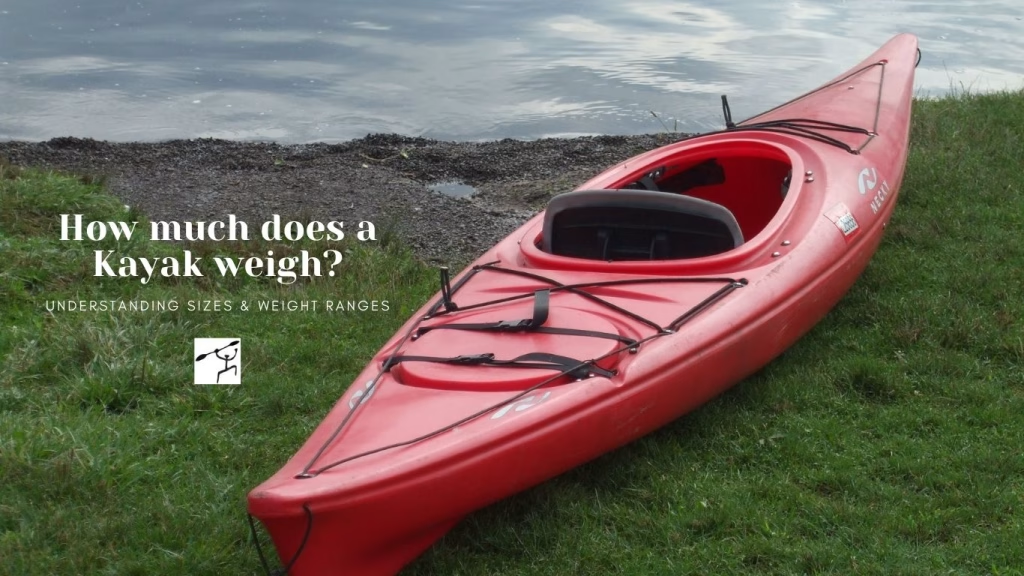
Quick Answer: Most kayaks weigh between 20 and 80 pounds, depending on their type, material, and length. A typical recreational kayak weighs 35–55 lbs, a 10-foot kayak weighs 35–50 lbs, a 12-foot kayak weighs 45–70 lbs, and fishing kayaks can exceed 80–100 lbs when rigged.
Let me tell you something nobody mentions in the kayak buying guides.
You’ll spend weeks obsessing over the hull design, the color, the seat comfort, the storage hatches and then you’ll pull into the parking lot on your first trip, pop the roof rack straps, and realize you have absolutely no idea how you’re getting this thing to the water by yourself.
That’s when kayak weight becomes very, very real.
I’ve watched people grunt, stumble, and nearly throw their backs out dragging kayaks across gravel parking lots. I’ve seen brand new fishing kayaks get scratched to pieces because the owner couldn’t lift it cleanly and just gave up and dragged. And almost every time, it’s the same story: they never seriously thought about how much does a kayak weigh before they bought it.
So yeah this guide exists because that question matters way more than the kayak industry wants to admit. Let’s get into it properly.
What Is the Average Weight of a Kayak?
The average kayak weighs somewhere between 35 and 60 pounds for a single-person hardshell. But that range is almost misleading, because kayaks as a category go from a 15-pound inflatable that fits in a backpack to a 120-pound fishing beast that requires two people, a cart, and possibly a small prayer to move.
So when people ask how heavy is the typical kayak the real answer depends on what “typical” means to them. A weekend lake paddler and a serious offshore angler are buying completely different boats.
Here’s a quick reference table so you have something to anchor to:
| Kayak Type | Average Weight Range |
|---|---|
| Recreational | 35–55 lbs |
| Inflatable | 15–40 lbs |
| Touring / Sea | 45–70 lbs |
| Fishing (sit-on-top) | 55–100+ lbs |
| Whitewater | 30–50 lbs |
| Tandem | 60–100 lbs |
| Kids / Youth | 18–30 lbs |
Now let’s break each category down in a way that actually helps you make a decision.
How Much Does a 10-Foot Kayak Weigh?
Short answer: 35 to 50 pounds, give or take depending on what it’s made of.
The 10-foot kayak is basically the Honda Civic of the paddling world reliable, accessible, not trying to be anything it isn’t. Most people buying their first kayak end up in this size range, and honestly, for calm lakes and slow-moving rivers on the weekends, it handles everything you need it to.
The Pelican Maxim 100X is one of the most commonly sold recreational kayaks in the US weighs around 39 pounds. That’s light enough to hoist onto a roof rack without help if you know what you’re doing. A thermoformed version of something similar might drop to 32 or 33 pounds. Go the other direction with a thick plastic fishing-oriented 10-footer and you could be looking at 50+ lbs easily.
Here’s the thing about how much does a 10 foot kayak weigh that nobody says clearly: at this size, the weight is manageable for most adults, but “manageable” isn’t the same as “comfortable.” A 45-pound kayak sounds fine until you’re carrying it 300 feet down a sloped boat ramp at 7am, solo, with a paddle under your arm. It adds up.
If you’re buying a 10-foot kayak and plan to paddle alone regularly, I’d push hard to find something under 45 pounds. Your future self will be grateful.
How Much Does a 12-Foot Kayak Weigh?
Step up to 12 feet and you’re typically looking at 45 to 70 pounds, with most plastic models clustering right around 55–65 lbs.
This is where things get real for solo paddlers. Sixty pounds sounds fine when you’re reading specs on a laptop, but carry one across a beach and it’s a different conversation. The weight starts to genuinely affect your experience not just the loading part, but also how motivated you feel to go paddling in the first place. I’ve talked to people who bought 65-pound kayaks and slowly stopped paddling because the logistics wore them down.
That’s not a knock on 12-foot kayaks they’re excellent boats. Better tracking than shorter models, more storage, higher weight capacity, and they handle open water much more confidently. If you’re doing half-day trips with a cooler and some gear, how much does a 12 foot kayak weigh becomes worth understanding before you commit.
The practical advice: if you’re buying in this size range and don’t have a loading assist system, try to stay under 55 pounds. Composite and thermoformed options exist in the 12-foot range that hit 45–50 lbs. Yes, they cost more, but so does a chiropractor.
Kayak Weight by Type: A Full Breakdown
Recreational Kayaks (35–55 lbs)
These are the everyday boats. Wide, stable, forgiving, made mostly from rotomolded polyethylene which is tough but not light. A 9- to 12-foot recreational kayak will almost always land in this range.
They’re great for what they’re built for calm water, short trips, people who are figuring out if they even like kayaking before investing in something serious. The weight is acceptable. Not thrilling, but acceptable.

Touring and Sea Kayaks (45–70 lbs)
Longer boats usually 14 to 18 feet with a sleeker profile and serious storage hatches. A plastic touring kayak can push 65–70 lbs, while a fiberglass equivalent might come in at 50–55 lbs.
These kayaks are worth every pound if you’re paddling coastal water, doing overnight trips, or putting in serious mileage. The extra weight is the cost of what the boat can do. Just don’t underestimate the logistics of loading an 18-foot sea kayak onto a roof rack by yourself.

Whitewater Kayaks (30–50 lbs)
Short, compact, and designed to take abuse. At 6 to 9 feet, whitewater kayaks are among the lighter hardshell options which matters when you’re portaging around a rapid or hiking in to a put-in. Weight range typically runs 30–50 lbs and most river runners appreciate every pound they can avoid.

Fishing Kayaks (55–100+ lbs)
This is where how much does a kayak weigh becomes a serious question and not just an academic one.
A basic fishing sit-on-top starts around 55–65 lbs. Add a pedal drive system, a fish finder, rod holders, an anchor trolley, and a tackle organization system, and you’re suddenly dealing with 85–100 lbs on the bare hull before a single fish has been caught or a drop of water touched.
Fully rigged fishing setups, loaded with gear, can exceed 150 pounds total. I’m not exaggerating. This is why fishing kayakers almost universally use a cart and many use a dedicated trailer. It’s not laziness, it’s physics.

Inflatable Kayaks (15–40 lbs)
The lightest answer to how much does a kayak weigh hands down. Modern inflatables built from drop-stitch or military-grade PVC weigh 15 to 35 pounds for solo models. They fit in a duffel bag, go in your car trunk, and set up in about 10–15 minutes.
Performance has improved dramatically over the past decade. They’re not going to out-paddle a carbon fiber sea kayak, but for casual flatwater use, lighter river trips, and anyone dealing with apartment storage or frequent travel inflatables are genuinely excellent and wildly underrated.
Tandem Kayaks (60–100 lbs)
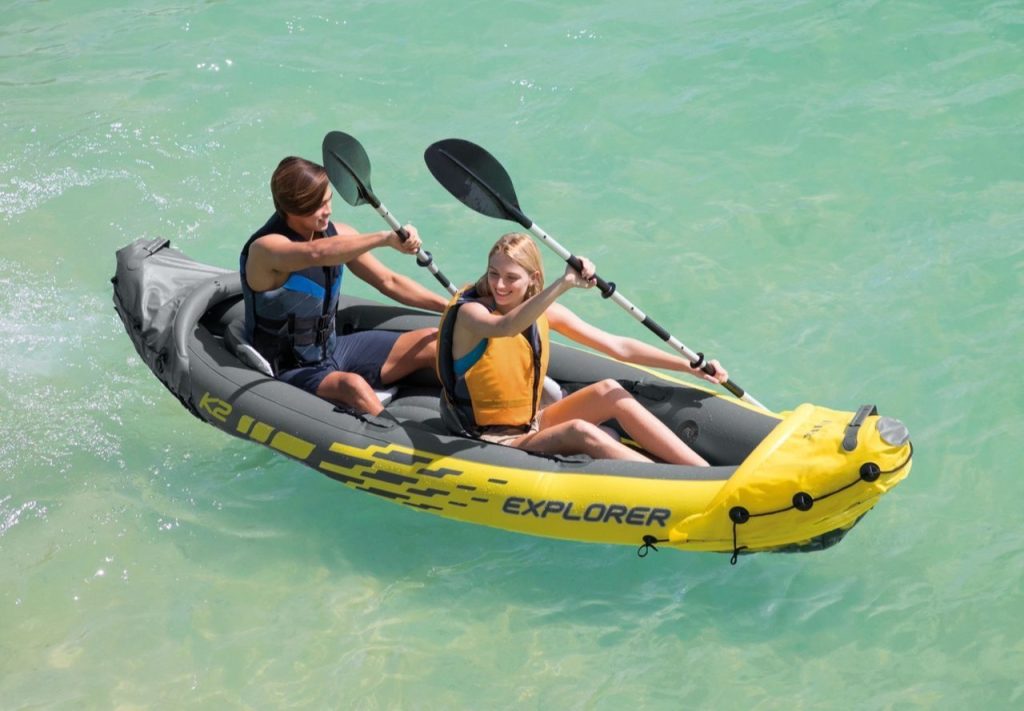
Roughly double the boat, not quite double the weight. Tandem kayaks run 60–100 lbs and 12–16 feet. Two people can share the carry, but you’ll still need a plan for loading. And if you’re ever thinking about taking a tandem out without a partner, it’s worth knowing whether one person can actually use a 2-person kayak safely, the weight balance challenges are real.

How Material Affects Kayak Weight
The same kayak design, built from different materials, can weigh 20–30 pounds differently. This is probably the most important factor in how much does a kayak weigh after overall size.
Polyethylene (plastic) is the most common material and the heaviest. It’s durable, affordable, and can take a beating against rocks and docks. But you pay for that durability in pounds typically 40–80 lbs depending on size.
Thermoformed ABS is the middle child lighter than polyethylene, more rigid, better-looking, and usually not much more expensive. Brands like Eddyline use it extensively. If you want to cut weight without going full composite, this is the sweet spot.
Fiberglass is noticeably lighter than plastic a fiberglass version of a boat will often weigh 15–20 lbs less than the poly equivalent. It’s faster on the water, feels more alive under the paddle, and repairs reasonably well. The cost is higher, but for regular paddlers, the long-term value is real.
Carbon fiber is the top of the mountain stiff, incredibly light, and eye-wateringly expensive. A carbon kayak can weigh 25–40% less than an equivalent plastic model. If weight is your primary concern and budget isn’t, this is the answer.
Inflatables as covered sit at 15–35 lbs and use PVC, Hypalon, or drop-stitch construction depending on the application.
What Size Kayak Do I Need? (Weight + Size Together)
This question and how much does a kayak weigh are basically inseparable. The right size is the one that fits both your paddling goals and your physical ability to move the thing around.
Three things worth thinking hard about before you buy:
Can you realistically load it alone? Under 50 lbs, most people are fine solo with decent technique. Between 50–70 lbs, it starts to require effort and a good system. Above 70 lbs, have a plan — a cart, a loading ramp, a friend, something.
How far is your typical carry? A parking lot right next to a dock is completely different from a quarter-mile trail to a wilderness lake. What feels manageable on flat asphalt turns miserable on a dirt path with roots.
What’s your total weight load? Here’s a number worth knowing: for best performance on the water, most experienced paddlers and outfitters recommend staying at 60–70% of your kayak’s maximum weight capacity not at 100%. That means your weight plus all your gear should sit comfortably below that threshold. A kayak operating near its limit is sluggish, harder to turn, and less safe in rough conditions.
| Paddler Goal | Recommended Size | Typical Weight |
|---|---|---|
| Casual flatwater, solo | 9–10 ft | 35–48 lbs |
| Day trips with light gear | 10–12 ft | 40–60 lbs |
| Multi-day touring | 12–14 ft | 45–70 lbs |
| Open water / coastal | 14–17 ft | 50–72 lbs |
| Fishing with full kit | 12–14 ft fishing kayak | 60–100+ lbs |
| Kids and youth | 6–8 ft | 18–30 lbs |
Why Kayak Weight Matters More Than You Think
People underestimate this consistently, so let me be direct.
The weight of your kayak shapes how often you actually use it. Not how well it performs how often you bother going in the first place. A 40-pound kayak that’s easy to grab and go gets used three times a week. An 85-pound kayak that requires 20 minutes of logistics prep gets used three times a summer. I’ve seen it happen over and over.
On the water, weight affects real things too. A heavier kayak takes more effort to get up to speed and more effort to keep moving. In headwinds and currents, lighter kayaks are noticeably easier to drive. That said, heavier longer hulls often track better in choppy open water there are legitimate trade-offs, not just downsides to weight.
And then there’s the buoyancy issue. When a kayak is loaded close to its maximum weight capacity, it sits lower in the water. That means more resistance, worse handling, and a meaningfully higher risk of taking on water or capsizing in conditions that would have been fine with a lighter load. This is a real safety concern, not just a performance one.
Tips for Managing Kayak Weight
Even if you’ve already bought something heavy, a few things make a genuine difference:
A kayak cart is non-negotiable above 50 lbs. Two wheels and a simple frame turn a back-destroying drag into a two-minute roll from car to water. Get one. It costs $30–80 and is worth every cent.
Roof loading systems — things like the Thule Hullavator or Yakima’s loading assist make car-topping heavier kayaks dramatically safer, especially solo. If you regularly paddle alone and your kayak is over 55 lbs, this is a worthwhile investment.
Pack it smart. Keep gear weight centered in the kayak, not piled in the bow or stern. An unbalanced load is harder to paddle and harder to control, and it makes the kayak feel heavier even when it technically isn’t.
Don’t fight the physics solo. There’s nothing wrong with asking for help loading a heavy boat. The injury you’re preventing is worth more than the two minutes it saves to do it alone.
Frequently Asked Questions
How much does a kayak weigh on average? For a standard single-person hardshell, plan on 35–60 lbs. Inflatables come in much lighter at 15–40 lbs, and fishing kayaks can run well past 80–100 lbs once they’re rigged out.
How heavy is the typical kayak for a beginner? Most beginner-friendly recreational kayaks sit in the 35–50 lb range light enough to manage solo with a bit of practice, stable enough to build confidence on flat water.
How much does a 10 foot kayak weigh? Usually between 35 and 50 pounds. The most popular recreational models in this size land right around 38–45 lbs, which is genuinely manageable for most adults to carry and load alone.
How much does a 12 foot kayak weigh? Expect 45–70 lbs. Plastic models tend to run heavier (55–70 lbs), while thermoformed and composite versions can get down to 45–55 lbs for the same length.
What size kayak do I need based on my weight? Use the 60–70% capacity rule: your body weight plus all your gear should not exceed 60–70% of the kayak’s listed maximum capacity. A 180 lb paddler with 25 lbs of gear needs at least a 290–310 lb capacity kayak for optimal performance.
Is a lighter kayak always the better choice? Not automatically. Lighter kayaks are easier to transport and feel quicker on flat water. Heavier kayaks sometimes track better in wind and chop. The right choice depends on where you paddle most often.
Can one person carry a kayak without help? Under 50 lbs — yes, with decent technique. Between 50–70 lbs — probably, but a cart makes it much easier. Above 70 lbs — use a cart or bring someone. Above 90 lbs — don’t attempt solo loading without a proper system.
Does a kayak’s weight affect how it paddles? Absolutely. Heavier kayaks take more energy to accelerate and maintain speed. They also sit lower in the water when loaded, which increases drag and reduces responsiveness. Getting the weight right for your paddling style genuinely matters on the water.
What is the weight limit for a typical kayak? Recreational kayaks usually cap at 250–300 lbs. Touring and sea kayaks often handle 300–400 lbs. Fishing kayaks built for heavy loads can accommodate 400–500 lbs. Always check the manufacturer’s specific rating.
How much do tandem kayaks weigh? Most tandem kayaks weigh 60–100 lbs and run 12–16 feet long. Plan to always have two people help with transport even splitting the load, it’s a meaningful carry.
The Bottom Line
How much does a kayak weigh? Anywhere from 15 to 120-plus pounds, depending on type, material, and how it’s set up.
But the more useful version of that question is: how much weight can you comfortably manage, consistently, on the days you want to get out on the water? Because that number not the spec sheet, not the marketing photos is what determines how much you actually use the thing.
For most Americans getting into kayaking, a 35–50 lb recreational kayak in the 10-foot range is the honest sweet spot. It’s manageable, versatile, and won’t make you dread the parking lot before you even reach the water. If you’re fishing seriously, build a transport plan around whatever you buy. If portability is your priority above everything else, go inflatable and don’t look back.
Know the weight before you buy. Know your own limits honestly. And get a cart seriously, just get a cart.