

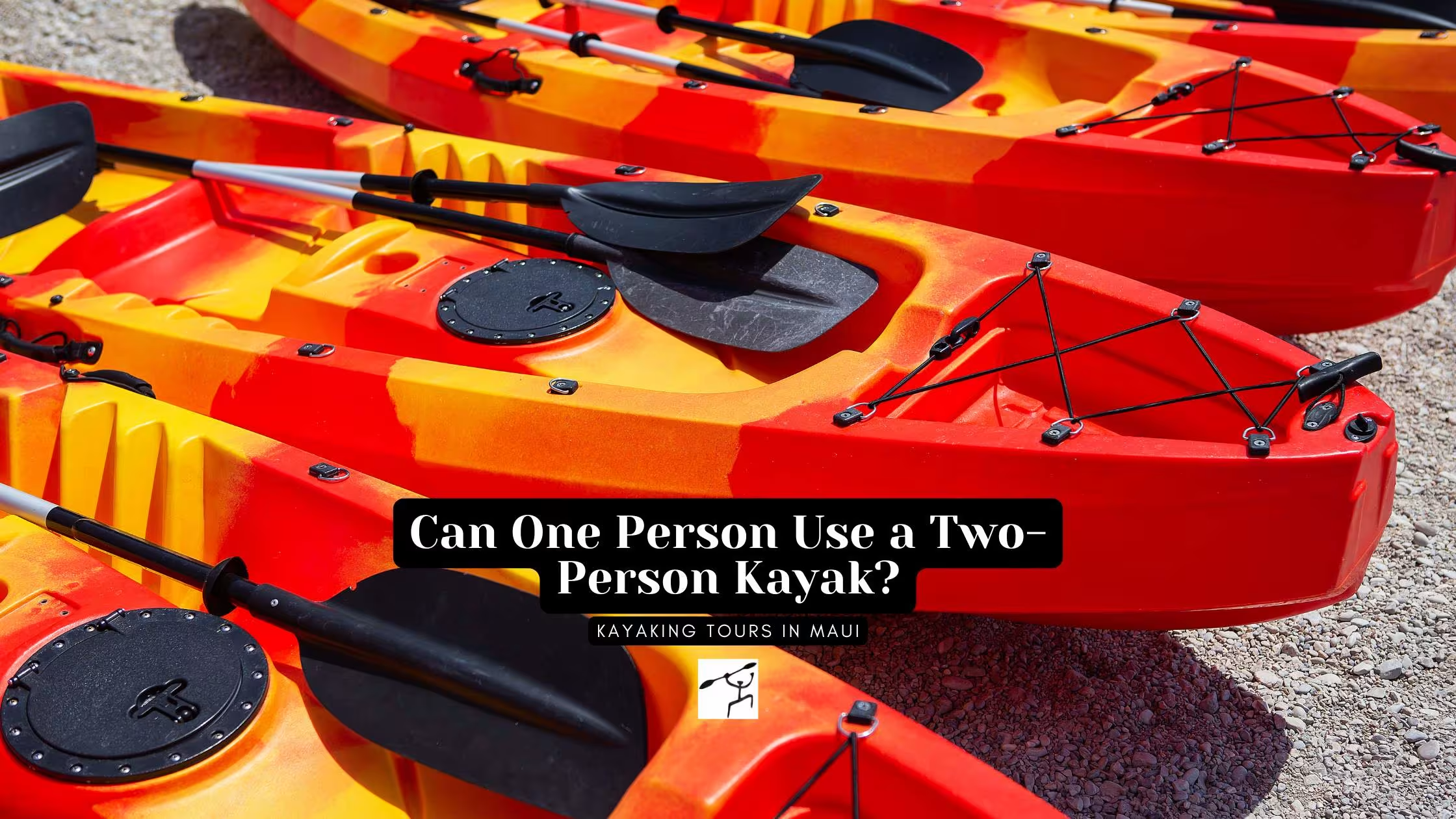
Yes, absolutely. Can one person use a 2 person kayak? Not only is it possible millions of solo paddlers do it every single season. But there’s a right way and a wrong way to go about it, and knowing the difference can completely change your time on the water.
Whether you already own a tandem and your paddling partner bailed, or you’re shopping for a kayak and wondering if a two-seater could pull double duty, this guide covers everything you need to know before you hit the water solo.
What Happens When You Paddle a Tandem Kayak Alone?
Before we get into the tips and tricks, let’s talk physics. A two-person kayak is designed for two paddlers two sets of weight, two paddle sources pushing the boat forward. When you remove one of those paddlers, the dynamic shifts significantly.
Here’s what you’ll notice immediately:
The kayak becomes harder to track in a straight line. With only one person paddling from one position, the uneven force makes the boat want to spin or veer. This is the number one complaint paddlers have when they first try to use a two man kayak solo.
The weight distribution is off. Two-person kayaks are balanced for weight spread across two cockpits. Sitting in the rear seat alone leaves the front of the boat riding high, which catches wind like a sail and makes steering a workout.
It feels more sluggish. Larger hull surface area without the weight to compensate means more drag and less efficient paddling. You’re essentially moving a bigger boat with half the power.
None of this means it can’t be done. It just means you need to be smart about it and we’re going to show you exactly how.
Where to Sit: The Most Important Decision You'll Make
If there’s one thing that separates a frustrating solo tandem experience from a genuinely enjoyable one, it’s where you position yourself.
Most paddlers instinctively climb into the rear seat it feels natural, it’s where the “captain” sits in a two-person kayak. But when you’re alone, the rear seat is actually the worst place to be. The bow lifts out of the water, the wind catches it, and you’ll spend more energy fighting the current than actually paddling.
The best solution: sit in the center.
Can one person use a 2 seater kayak comfortably? Yes, if you find the center point of the hull and either use a foam pad or move to the front seat (which is often closer to center on most tandem designs). Some paddlers simply kneel or sit on a camp pad in the center cockpit area with their gear loaded around them.
If your kayak has two fixed seats:
- Use the front seat facing backward this places you closer to center and dramatically improves trim
- Load heavy gear into the bow to compensate for the missing paddler weight
- Keep the rear footpegs adjusted so you have support even from the front position
This single adjustment transforms how a tandem handles solo. It’s the difference between fighting the kayak and flowing with it.
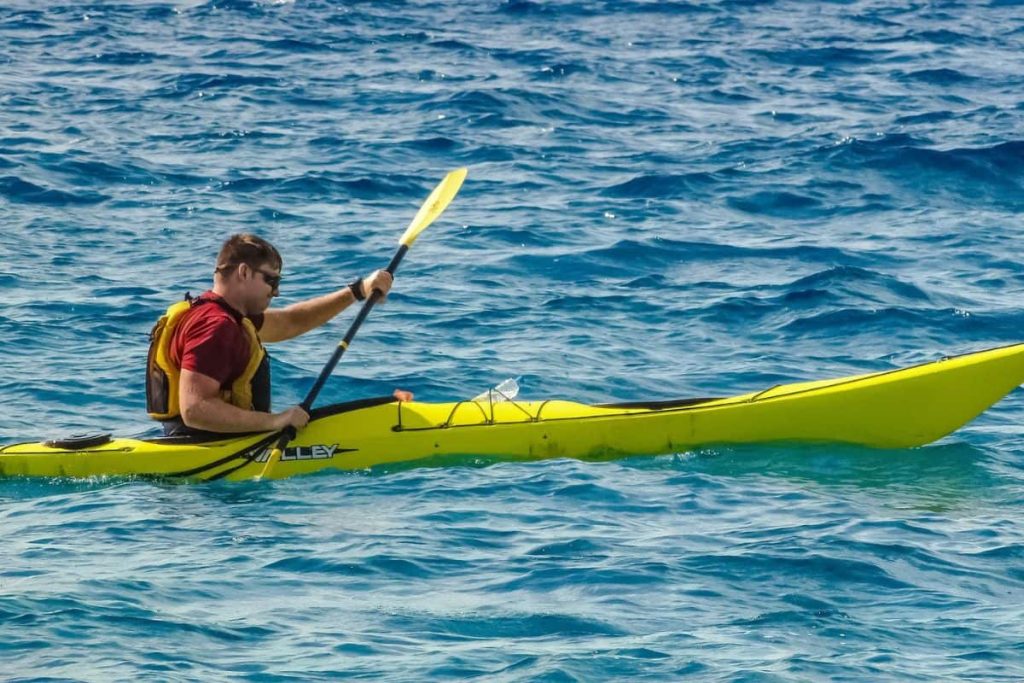
5 Practical Tips for Solo Paddling a Two-Person Kayak
1. Use Ballast Weight Strategically
Can one person use a two-person kayak without extra weight? Technically yes, but intelligently loaded gear makes a huge difference. Pack water bottles, dry bags with camping gear, or even a dedicated ballast bag in the empty cockpit. This flattens your trim, reduces wind catch, and makes the boat behave much more like it was designed to.
Target weight distribution: Try to keep roughly 40-60% of total weight toward the bow when paddling solo.
2. Switch to a Longer Paddle
When you can one person use a two man kayak more effectively? When their paddle matches the boat’s width. Tandem kayaks are wider than solo boats often 32 to 36 inches wide. A standard 230cm paddle may feel too short. Moving to a 240-250cm paddle gives you a cleaner stroke arc without awkward elbow angles.
3. Lower Your Seat Back or Remove It
A high seat back restricts your torso rotation, which is the engine of an efficient paddle stroke. When paddling a larger boat solo, you need every bit of power you can generate. Consider removing the rear seatback or swapping to a low-profile kayak seat.
4. Rudder and Skeg Make a Real Difference
If your tandem kayak has a rudder system, use it religiously when paddling solo. The tracking issues that come with asymmetric paddling are dramatically reduced with a deployed rudder. If you have a skeg (a fixed fin you drop down), lower it in crosswinds and moving water.
5. Paddle Both Sides Consciously
New solo tandem paddlers often unconsciously favor their dominant side. If you want to dial in your stroke mechanics properly, our full guide on how to paddle a kayak covers grip, stroke technique, and paddle selection in detail all of which matter even more when you’re moving a bigger boat solo.
Can One Person Use a Two-Person Kayak on Calm vs. Moving Water?
The conditions matter a lot when you’re asking can one person use a 2 person kayak safely.
Flat Water (Lakes, Calm Bays, Slow Rivers)
This is the ideal environment for solo tandem paddling. With no current or wind challenges, even a novice paddler can have a perfectly enjoyable experience. Position yourself near center, use the tips above, and you’ll find the boat surprisingly manageable.
Moving Water (Rivers with Current)
This is where it gets more technical. When you’re solo in a tandem kayak on a river with current or obstacles, you need confident edging and precise stroke control. The longer hull is less maneuverable than a solo boat, and corrections take more time. It’s doable for intermediate paddlers beginners should stick to flat water first.
Open Water (Coastal, Large Lakes, Wind Exposure)
This is the most challenging scenario. Open water means wind, chop, and waves and a high-riding, empty-bow tandem is vulnerable to all three. Many experienced paddlers can one person use a two man kayak in coastal conditions, but it takes good technique, proper ballast, and ideally a rudder system.
General rule: The rougher the conditions, the more preparation you need before going solo in a tandem.
Pros and Cons of Using a 2-Person Kayak Solo
The Genuine Advantages
More storage space. The empty cockpit becomes a gear garage. Campers, photographers, and anglers love having that extra room for equipment.
Stability. Wider hulls are inherently more stable. If you fish from a kayak or like to set up a tripod for photography, that extra beam width can actually be a benefit when paddling alone.
Versatility. One boat, two uses. If you sometimes paddle with a partner and sometimes solo, owning a quality tandem means you’re covered both ways. Can one person use a 2 seater kayak and then bring a friend the following weekend? Absolutely.
Value. Buying one tandem instead of two solo boats is often significantly cheaper and you only need to store and transport one hull.
The Real Drawbacks
Efficiency. You’re moving more boat with less power. Over a long day on the water, this is genuinely tiring.
Maneuverability. Long tandem hulls don’t pivot quickly. In tight spots narrow rivers, rocky sections, landing zones a solo paddler in a tandem has less control than they would in a purpose-built solo boat.
Weight. Tandem kayaks are heavier than solo boats often 60-80+ pounds. If you’re curious how that compares across kayak types and sizes, this breakdown of how much a kayak weighs is worth a read before you buy. Loading and unloading solo is a two-person job made awkward by one.
Awkward aesthetics (if that matters to you). Some paddlers feel self-conscious in what’s clearly a boat for two. This is the least practical concern, but it’s worth mentioning it shouldn’t stop you, but some people notice it.
The "Divorce Boat" Reputation — And What It Actually Means for Solo Paddlers
Tandem kayaks are famous in paddling culture as “divorce boats.” The joke is that being stuck in a boat with someone, unable to escape, moving slower than you’d like, being told to paddle differently it puts relationships to the test.
For solo paddlers, this reputation is actually reassuring. If you’ve heard this joke and wondered, can one person use a two-person kayak to avoid the drama? Yes. Many people buy tandems with full intent to paddle them solo regularly, keeping the second seat available for occasional guests. You eliminate the communication problem entirely because there’s no one to communicate with.
What About Kayak Type? Does It Matter?
Not all two-person kayaks behave the same when solo paddling. Here’s a quick breakdown:
Sit-on-top tandems are generally the most forgiving for solo use. The open cockpit design lets you sit more centrally, and the hull shape tends to be more forgiving of off-center weight.
Sit-inside tandems are trickier because the fixed cockpit positions are harder to move between. You’re more locked into using either the front or rear seat. Still manageable, but requires more strategy.
Before your first solo tandem outing, make sure you’ve also brushed up on how to get in a kayak safely entering a wide, heavier tandem solo is a different skill than boarding a compact solo boat.
Inflatable tandems handle solo paddling surprisingly well. They’re lightweight, the cockpit positions are often flexible, and they’re easy to ballast with gear. Many experienced paddlers find inflatable tandems the ideal solo-capable option when budget and storage are concerns.
Recreational vs. touring tandem designs — recreational tandem kayaks are wider, more stable, and slower. Touring tandems are narrower and faster but more sensitive to weight imbalance. A recreational tandem is more forgiving for solo use; a touring tandem rewards proper technique but punishes sloppy setup.
Solo Tandem vs. Buying a Dedicated Solo Kayak: Which Is Right for You?
This is the real decision many paddlers face. Can one person use a 2 person kayak as a long-term primary paddling boat? Here’s how to think about it:
Choose the tandem if:
- You paddle with partners or family regularly and want one boat for both uses
- Storage or budget limits you to one kayak
- You prioritize stability and storage over speed and agility
- Your paddling is mostly calm, flat water
Choose a dedicated solo kayak if:
- You paddle alone 90%+ of the time
- You want the best performance and efficiency for solo use
- You paddle moving water or coastal environments regularly
- You want the lightest, most maneuverable experience possible
There’s no wrong answer but knowing what you actually need prevents expensive regrets.
Frequently Asked Questions
Can one person use a 2 person kayak safely? Yes. As long as you adjust your seating position (ideally toward center or in the front seat facing backward), distribute weight appropriately, and match your conditions to your skill level, paddling a two-person kayak solo is perfectly safe.
Can one person use a two-person kayak on open water? Yes, but with preparation. Open water introduces wind and chop that amplify the handling challenges of an unbalanced tandem. Use ballast weight in the bow, deploy any rudder or skeg, and make sure conditions are within your skill range.
Where should I sit when using a 2 person kayak solo? Aim for center. If the kayak has two cockpits, the front seat (or sitting in the front seat facing backward) places you closer to the center of the hull. Adding gear to the empty bow area helps balance the trim.
Is it harder to paddle a tandem kayak alone? It’s different, not impossible. Tracking takes more attention, efficiency is lower than a solo boat, and weight distribution matters more. With proper technique and setup, most paddlers adapt quickly.
Can one person use a two man kayak if they’re a beginner? Yes — especially on flat, calm water. The wide hull of most tandem kayaks actually provides good stability for beginners. Just focus on finding the right seat position before you launch.
Will using a two-person kayak solo damage it? No. There is nothing structurally different about paddling a tandem solo versus with two paddlers, as long as you stay within the kayak’s weight and water-type recommendations.
Is a tandem kayak good for solo fishing or camping? Absolutely. The extra space in the empty cockpit is ideal for storing fishing gear, a tackle box, a cooler, or camping equipment. Many anglers and paddling campers specifically choose tandems for solo trips because of the storage advantage.
The Bottom Line
Can one person use a 2 person kayak? Yes, with the right adjustments, it works well and for many paddlers, it works great. The key is understanding where the challenges come from (weight distribution, tracking, hull size) and addressing them directly before you leave the shore.
Move toward center, ballast the bow, use your rudder, and consciously work on symmetrical strokes. Do those four things and you’ll find that your tandem handles far better than you expected alone.
Can one person use a two-person kayak as their primary paddling setup? Many people do, every single day. It’s not a compromise — it’s a choice, and for the right paddler with the right conditions, it might be the smartest choice you make this season.
Now get out there and paddle.
can one person use a 2 person kayak
can one person use a 2 person kayak
can one person use a 2 person kayak
can one person use a 2 person kayak
can one person use a two man kayak,
Can One Person Use a Two-Person Kayak
can one person use a two man kayak,
Can One Person Use a Two-Person Kayak