


Olowalu Beach Maui is consistently one of the best shore-snorkel spots on the entire island — a shallow, calm reef system off West Maui where Hawaiian green sea turtles (Honu) gather at an active cleaning station, often in groups of five to twelve animals per visit. If you want to get eye-level with wild turtles without paying for a boat, this is your spot.
Quick Answer: What You Need to Know Before You Go
- Location: Mile Marker 14 on Honoapi’ilani Highway, between Lahaina and Maalaea
- Entry: Free — public beach, no permit required
- Best for: Sea turtle encounters, beginner snorkeling, calm water
- Turtle sightings: Routine at the cleaning station, roughly 300–600 ft from shore
- Facilities: None — no restrooms, no showers, no lifeguard
- Best time: Early morning, April through October for calmest conditions
What Is Olowalu Beach and Why Do Locals Call It the Turtle Reef?
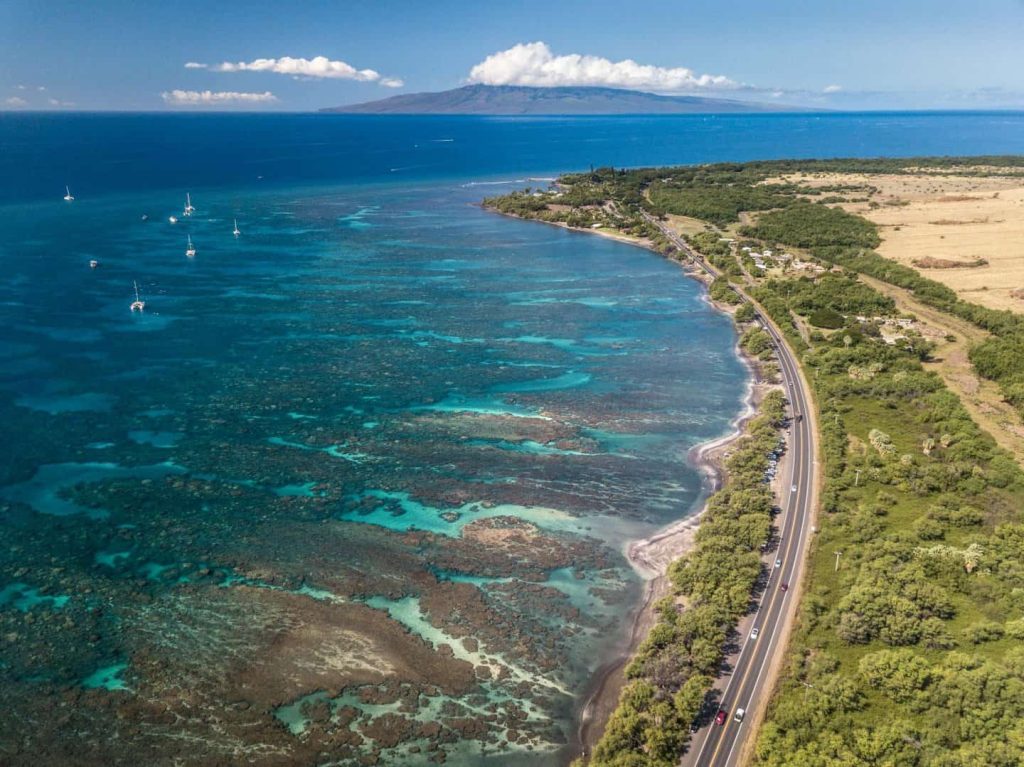
Olowalu Beach sits along a stretch of the Honoapi’ilani Highway that most visitors blow right past doing 50 mph on the way to Lahaina. There’s no sign, no parking lot, no beach park signage. Just a gravel and dirt pull-off near Mile Marker 14, a line of kiawe trees, and beyond them one of the most intact reef systems on Maui’s western coastline.
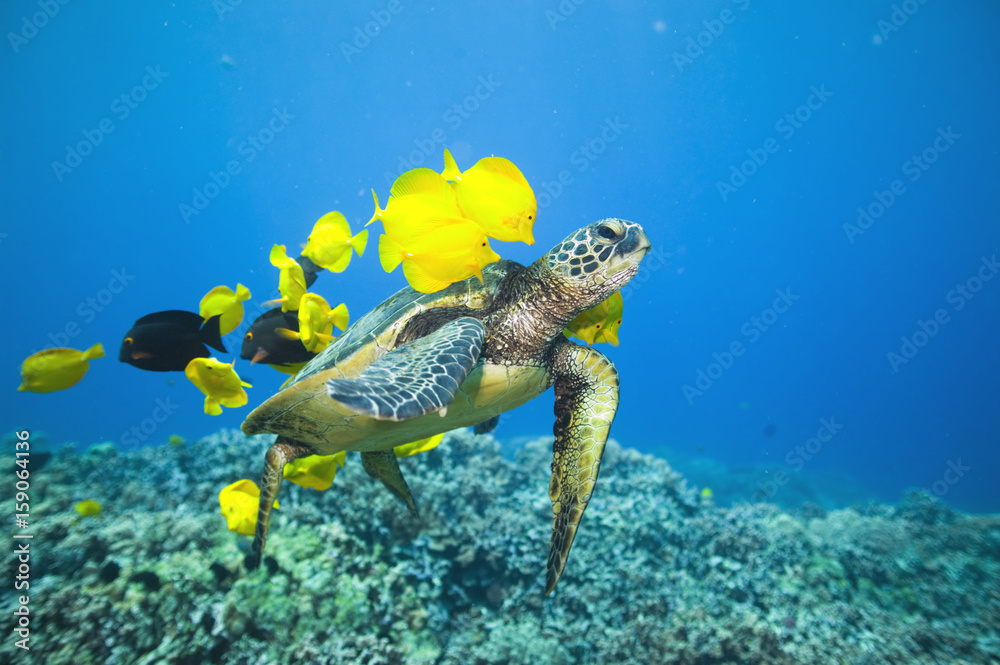
The “turtle reef” nickname comes from the cleaning station that sits roughly 400 to 600 feet from shore in 6 to 10 feet of water. Cleaning stations are specific reef locations where turtles return again and again to have parasites and algae removed by small reef fish primarily yellow tang and surgeon fish. The turtles float almost motionless while the fish do their work, which is exactly why snorkelers can get so close without disturbing them. The turtles are not curious about you they’re busy. That stillness is what makes Olowalu unlike any snorkel spot on the island.
Locals have been visiting this reef for decades, long before TripAdvisor reviews made it searchable. The reef itself spans several miles of coastline and contains an estimated 24 coral species, including healthy stands of antler coral and cauliflower coral that you simply won’t find in the more-trafficked spots like Ka’anapali or Black Rock. Because there’s no formal infrastructure here, the reef has stayed relatively healthy — though that also means zero services when you show up.
The Legend of Honu: Why Sea Turtles Are Sacred in Hawaiian Culture
In Hawaiian tradition, the Honu the Hawaiian green sea turtle is considered an Aumakua, a family spirit guide or ancestral guardian. Not every family claims the Honu as their Aumakua, but those who do treat encounters with wild turtles as something genuinely spiritual, not just a wildlife sighting.
This matters at Olowalu for a practical reason: the respect built into Hawaiian culture toward these animals is exactly what NOAA’s Marine Turtle Protection laws are trying to enforce legally. When you understand that these turtles are not just “cool animals” but creatures Hawaiian families have revered for generations, you approach them differently. You give them space. You don’t reach out to touch them. You watch.
The Hawaiian green sea turtle was listed as threatened under the Endangered Species Act in 1978. Since then, their numbers have recovered significantly Hawaiian nesting populations have grown at roughly 5% per year but they remain a protected species, and their presence at Olowalu is a sign that this reef is still doing something right.
Olowalu at a Glance: Quick Facts for 2026
| Detail | Info |
|---|---|
| Address / GPS | Near Mile Marker 14, Honoapi’ilani Hwy, Olowalu, HI 96761 |
| Entry fee | Free |
| Parking | Roadside pull-off only (no lot) |
| Water depth | Knee-deep to 12 ft depending on distance from shore |
| Visibility | 30–60 ft on calm mornings |
| Facilities | None (no restrooms, no showers) |
| Lifeguard | No |
| Best months | April–October (snorkeling), December–April (whale season) |
| Turtle rating | High — cleaning station sightings are routine |
| Reef safe sunscreen | Required under Hawaii law (HB 132, effective 2021) |
Where Exactly Is Olowalu Beach? Location, Directions, and Parking Guide
Olowalu Beach is located on West Maui’s southern coast, approximately 6 miles south of Lahaina and about 10 miles north of Maalaea Harbor. It sits along the Honoapi’ilani Highway the main coastal road at Mile Marker 14. There is no official beach park, no sign, and no visible infrastructure from the road. Most people who find it the first time do so because someone gave them specific directions. That’s exactly what this section is.
The reef here is part of the broader Olowalu coastline, which runs for several miles and connects to a small village inland that’s home to the Olowalu General Store and the Leoda’s Kitchen pie shop two local institutions worth noting. The beach itself is narrow, the sand is coarse, and the kiawe trees (a thorny relative of mesquite) create a natural buffer between the road and the water. Watch your feet in the tree zone — the thorns are real and they puncture flip-flop soles without much effort.
How to Drive to Olowalu from Lahaina and Kihei
From Lahaina: Head south on Honoapi’ilani Highway (Highway 30). Drive approximately 6 miles. Watch for Mile Marker 14 on the makai (ocean) side of the road. The pull-off appears just past the marker. Drive time: roughly 10–12 minutes without traffic.
From Kihei / Wailea: Head north on Highway 31 (South Kihei Road), then connect to Highway 30 North at Maalaea. Drive north for about 10 miles. Mile Marker 14 will appear on your right (makai side). Drive time: approximately 20–25 minutes.
GPS tip: Search “Olowalu Beach Maui” in Google Maps and verify the pin lands near Mile Marker 14. Some navigation apps still drop the pin in slightly wrong locations. You’re looking for a gravel roadside pull-off — not a parking lot.
From Ka’anapali / Napili: Drive south through Lahaina on Highway 30, then continue south. Total drive from Ka’anapali is about 20 minutes.
Parking at Olowalu Beach: Roadside Pull-Off Tips and Common Mistakes
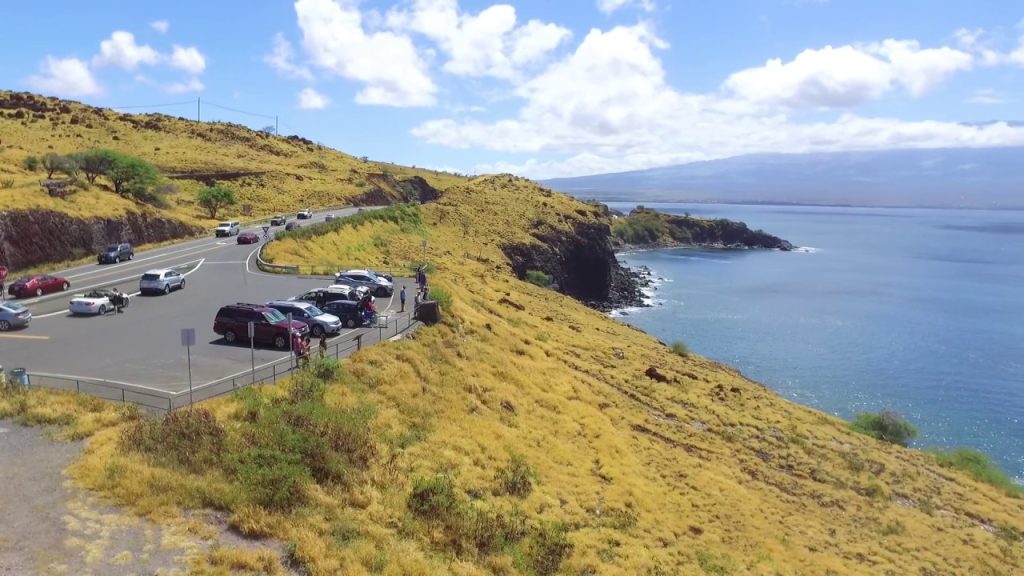
There is no dedicated parking lot at Olowalu Beach. Parking happens entirely on the mauka (inland) shoulder of Honoapi’ilani Highway near Mile Marker 14. The pull-off can fit roughly 8 to 12 vehicles depending on how people park. Arrive before 7:30 AM on weekends if you want space — by 9 AM the shoulder fills up, especially in peak season (June through August).
Common mistakes:
- Parking too close to the kiawe trees: the soft sandy soil near them can trap your tires, and a flat from thorns is an expensive way to ruin your morning
- Pulling too far past the marker: the reef entry directly in front of Mile Marker 14 is the best entry point; walking 200 yards south puts you over sand flats rather than reef
- Leaving valuables in your car: this pull-off is not monitored, and car break-ins, while not rampant, do happen along West Maui highway shoulders — take your gear with you or leave nothing visible
What Marine Life Lives at Olowalu Turtle Reef? A Complete Species Guide
The reef at Olowalu is more diverse than its low-key reputation suggests. Most visitors come for the turtles and leave stunned by everything else they saw. The reason is the coral structure this is not a dead or bleached reef. Healthy coral creates habitat, and habitat creates fish density. On a good morning with 40-foot visibility, you’re looking at a functioning ecosystem in miniature.
Hawaiian Green Sea Turtles (Honu): What to Expect at the Cleaning Station
The cleaning station is the main event. It sits roughly 400 to 600 feet from the beach entry point in about 6 to 10 feet of water. Turtles arrive at cleaning stations on a loose schedule that’s influenced by current, tide, and time of day, early morning visits between 7 and 10 AM tend to produce the best sightings, when the water is glassy and the light angle is good for visibility. If you want a back-to-back turtle experience during your trip, Turtle Town near Makena on South Maui offers a completely different reef environment with the same high turtle density — worth pairing on a multi-day snorkel itinerary.
What you’ll typically see: turtles hovering almost motionless at a specific coral head while small fish pick at their shells and skin. Some turtles look almost asleep. Others slowly rotate to give different angles to their attendant fish. You may see three turtles at a single coral head, or you may see a dozen spread across the zone. There’s no guarantee, but snorkelers here report turtle sightings on the vast majority of morning visits throughout the year.
The legal distance rule from NOAA is 10 feet, maintain it. Turtles that feel crowded will leave the cleaning station, which disrupts a biological process they depend on. Give them room and they’ll often drift toward you on their own.
Manta Rays, Blacktip Reef Sharks, and the 24 Coral Species You'll Find Here
Beyond the turtles, Olowalu reef hosts species that even experienced Maui snorkelers haven’t seen at more crowded spots:
- Manta rays: Occasional sightings, primarily in deeper water beyond the cleaning station zone. Not guaranteed, but Olowalu’s position on a nutrient-rich western coast makes encounters possible, especially on calm summer mornings.
- Blacktip reef sharks: Present in the reef system. Small (typically under 4 feet), shy, and completely uninterested in snorkelers. If you see one, watch — don’t chase. They’ll be gone in seconds.
- Reef fish: Humuhumunukunukuapua’a (Hawaii’s state fish), Moorish idols, parrotfish, triggerfish, and dense schools of yellow tang are all common at mid-reef depth.
- Coral: An estimated 24 species have been documented across the Olowalu reef system, including stands of antler coral, cauliflower coral, and lobe coral. Much of it is in genuinely good shape compared to heavily snorkeled sites.
Bonus: Humpback Whale Season at Olowalu (December to April)
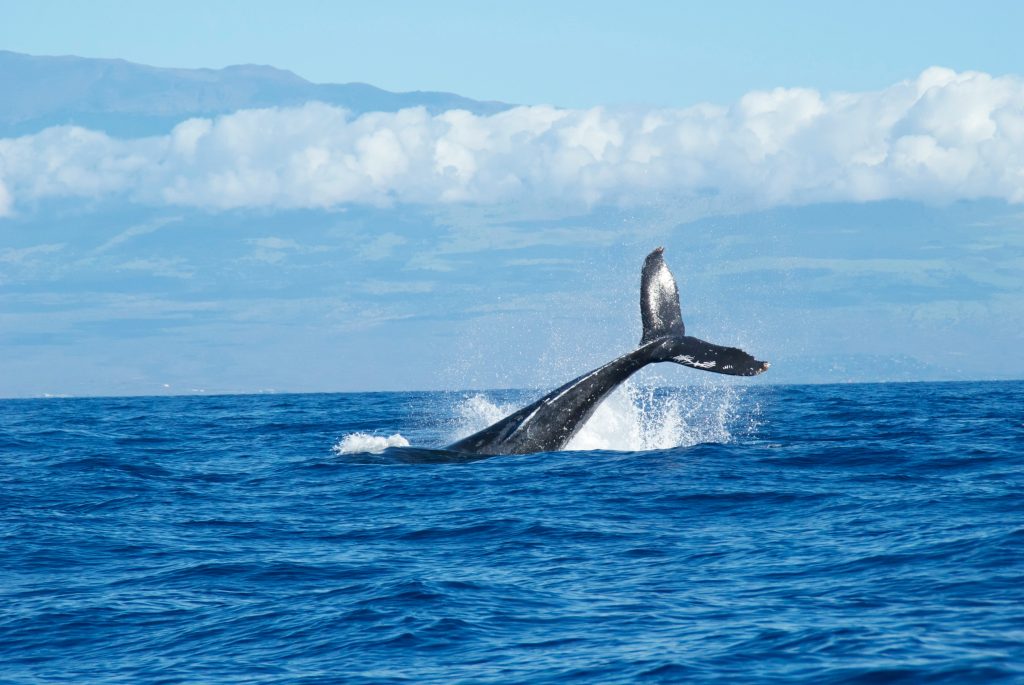
This is the part nobody tells you: from roughly December through April, humpback whales move through the Auau Channel directly offshore from Olowalu. The water here is in the heart of the Hawaiian Islands Humpback Whale National Marine Sanctuary, and during peak season (January through March), you can sometimes hear whale song while you’re snorkeling underwater — a low, eerie vibration that passes through the water and through you.
During whale season, Maui Adventure Tours Kayak Co. runs a Kayak Whale Watch and Snorkel tour that adds something genuinely unusual: a custom-built underwater hydrophone system that lets you hear real-time whale song while you’re sitting in your kayak above the Olowalu reef. You’re not just watching whales from a boat deck — you’re listening to them communicate below you, then sliding into the water to snorkel the same reef where turtles work the cleaning station. Whale sightings are guaranteed January through March. If your trip overlaps with peak season, this is the single best way to experience Olowalu.
Above the surface, whale breaches are visible from the beach. This is completely free, requires no tour, and happens reliably every winter. Pair it with your snorkel session and you have a half-day of wildlife viewing that would cost hundreds of dollars on a commercial tour elsewhere.
How to Snorkel Olowalu Reef: A Step-by-Step Entry Guide for Beginners and Experts
Here’s the section competitors get completely wrong. Most articles tell you “enter at Mile Marker 14” and stop there. That’s like telling someone to “turn left into Rome” as driving directions. The actual entry at Olowalu requires a little navigation knowledge, because the bottom transitions through distinct zones and getting through them wrong means either damaging coral, getting cut on urchins, or missing the turtles entirely.
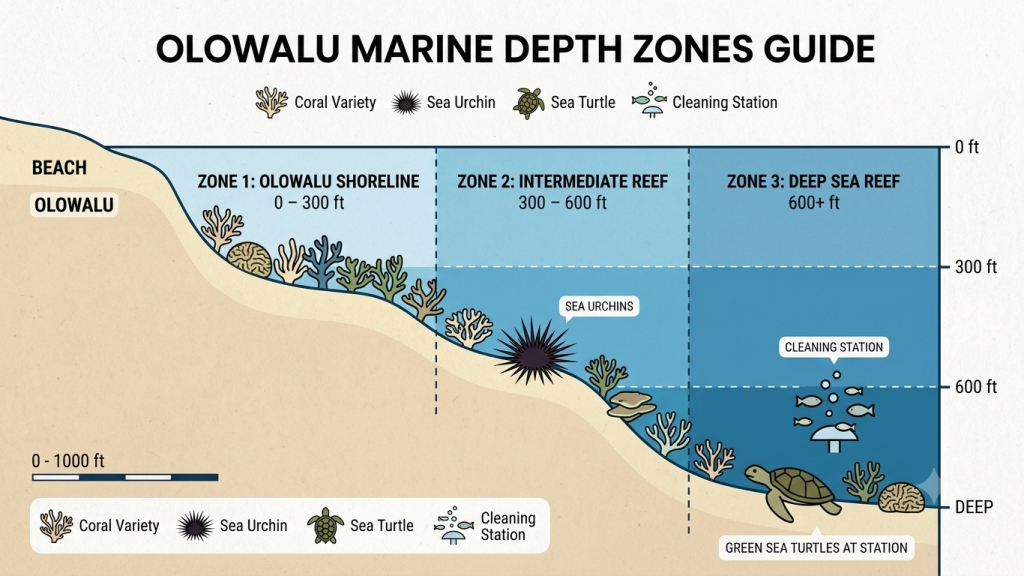
Zone 1 (0–300 feet): Navigating the Shallow Entry Without Damaging Coral
The first 300 feet from shore is the shallowest zone anywhere from knee-deep to waist-deep depending on tide. This is where beginners get nervous and where careless snorkelers do the most damage.
Entry technique: walk in slowly until the water is hip-deep, then float forward on your stomach rather than kicking off the bottom. The sandy bottom near shore transitions quickly to mixed sand and coral rubble, then to live coral heads. Once you’re floating, fins only no standing, no knee-planting. The coral here is fragile and recovers slowly. One misplaced knee can destroy a decade of coral growth.
Tide matters here more than anywhere else on the reef. At low tide, this zone can get uncomfortably shallow. Check the tide chart before you go, a mid-to-high incoming tide makes entry significantly more comfortable and reduces the risk of scraping bottom.
Zone 2 (300–600 feet): Finding the Sand Channels and Avoiding Sea Urchins
This is the intermediate zone where the reef starts getting interesting and where the two main hazards concentrate. The bottom becomes patchier here, alternating between live coral heads, sand channels, and scattered rocky areas.
Sand channels: Look for lighter-colored ribbons of sand running roughly parallel to shore. These are your highways through the reef. Navigate along them rather than directly over coral heads. They typically run 3 to 6 feet wide — wide enough to fin through without clipping live coral on either side.
Sea urchins: Long-spined black urchins (wana) hide in crevices throughout Zone 2. They’re not aggressive, but contact with their spines is extremely painful and the spines break off in skin. Stay neutrally buoyant — if you feel yourself sinking, adjust your fins rather than reaching for the bottom. If you’re using a flotation vest, use it. There’s zero shame in extra flotation at Olowalu.
Zone 3 (600+ feet): Where the Turtles, Mantas, and Best Coral Towers Are
Zone 3 is the payoff. By 600 feet from shore, you’re in 8 to 12 feet of water and the reef structure changes larger coral heads, more vertical relief, and the cleaning station itself sitting somewhere in this zone depending on current and turtle activity.
This is where you slow down and hover. Stop finning aggressively. Let the water carry you. Scan horizontally rather than looking straight down turtles at the cleaning station are often mid-water column, not on the bottom. When you spot one, maintain distance and watch for the cleaning fish activity that confirms you’ve found the station.
Experts with strong fins can push further — the reef continues well beyond 600 feet and the fish density actually increases with depth. If you’re comfortable in open water and the conditions are calm, there’s worthwhile reef out to 1,200 feet. But for most visitors, Zone 3 is where you stop and spend your time.
Best Time to Visit Olowalu Beach Maui in 2026
The short answer: April through October for snorkeling, December through April if you want whale season added to the experience. But the real answer is more nuanced.
Best Months (April–October) vs. Whale Season (December–April): How to Choose
Olowalu’s snorkeling is year-round, but conditions are noticeably better from April through October. During these months, the trade winds blow from the northeast, which keeps the water on Maui’s western coast glassy and calm. Visibility regularly hits 40 to 60 feet. Turtle activity at the cleaning station is consistent.
November through March brings the north swells that can push onto Maui’s western coast and stir up sediment near shore. Visibility drops and the entry zone gets choppy. The reef is still snorkelable, but you’ll have more bad days than good.
The overlap period roughly March through April is the sweet spot for visitors who want both: calm enough for decent snorkeling on many days, and whale season still active. Humpbacks typically leave Hawaiian waters by mid-April, so an early April trip can catch the tail end of whale season and the beginning of ideal snorkel conditions simultaneously.
Best Time of Day to Snorkel Olowalu: Why Early Morning Wins
Get in the water before 8 AM. This is the single best piece of advice for Olowalu and almost every West Maui shore dive.
By mid-morning, the trade winds pick up and create chop on the surface. By noon in summer, even Olowalu which is relatively protected has visible surface texture that reduces visibility and makes the swim back to shore harder. By 2 PM in winter, the wind is often strong enough to create small whitecaps.
Early morning also means better light for underwater photography, fewer people in the water (and therefore less fin-stirred sediment), and turtles actively working the cleaning station before the heat of the day pushes them deeper.
Practical tip: park, gear up, and be in the water by 7 AM. You’ll have the reef almost entirely to yourself for the first 90 minutes.
Olowalu Snorkel Tours vs. Shore Entry: Which Should You Choose?
The honest answer is that Olowalu’s shore entry is one of the most accessible on Maui, genuinely suitable for beginners with average swimming ability. But “accessible” doesn’t mean “one size fits all.” Here’s how to think about the decision.
Best Kayak and SUP Tours at Olowalu in 2026
For families with young children, older travelers, anyone who wants local guide knowledge, or visitors who want to cover more of the reef than they could swimming, a guided tour adds real value.
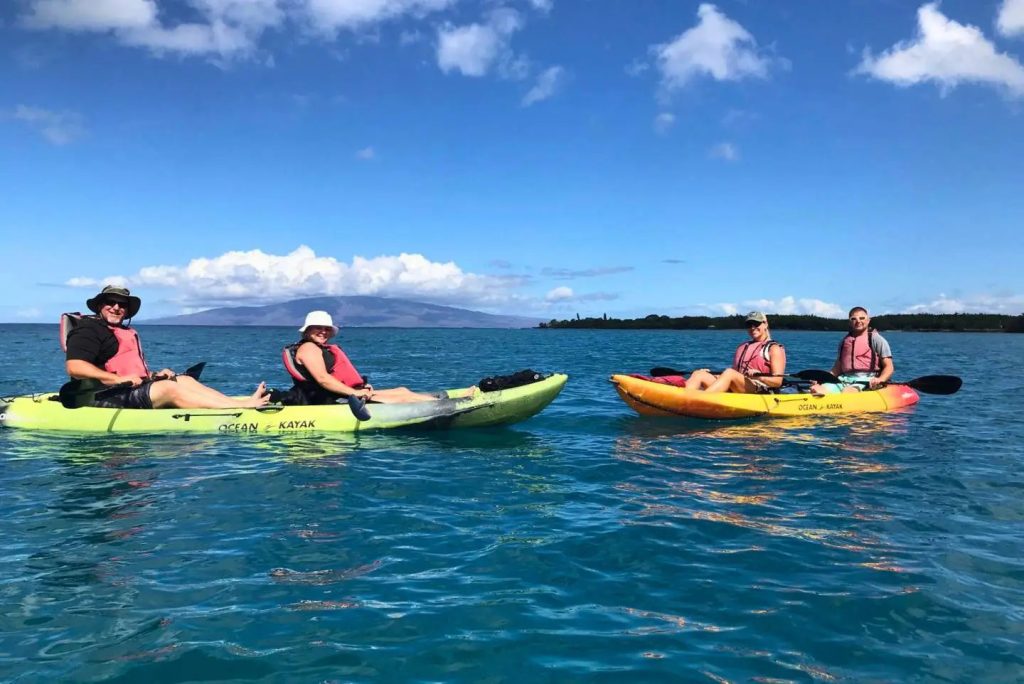
Maui Adventure Tours Kayak Co.’s Kayaking and Snorkeling at Olowalu is a 3.5-hour session that combines paddling the Olowalu coastline with guided snorkeling at the turtle reef. Their guides are certified Hawaii Marine Naturalists with Red Cross CPR and lifeguard training — they know the sand channels, the current patterns, and which coral heads the turtles favor on any given morning. You paddle out, which means you arrive at Zone 3 without burning energy on the 600-foot swim, and a guide navigates you through it. Tours run from $99 per person.
For SUP enthusiasts, paddleboarding out from the Mile Marker 14 entry and anchoring above the reef is a legitimate and popular option. Just know that leaving your board unattended in the water while you snorkel requires an anchor or a buddy staying topside.
Can Beginners Snorkel Olowalu Reef on Their Own? An Honest Assessment
Yes — with conditions. Olowalu’s first 300 feet from shore is genuinely shallow and calm on most mornings from April through October. If you can swim comfortably, know how to clear a snorkel mask, and aren’t panicked by open water, you can reach the cleaning station on your own.
What should give beginners pause: there’s no lifeguard, the kiawe thorns complicate a barefoot walk to shore, the sea urchins in Zone 2 punish careless swimmers, and if conditions turn while you’re out a wind shift, an unexpected swell there’s no one coming to help. Go early, check conditions before entering, and consider a buddy system even if you’re both experienced.
If this is your first open-water snorkel experience and Olowalu is your starting point, a guided session is worth every dollar. Maui Adventure Tours Kayak Co. runs a Shoreline Snorkel at Turtle Reef led by Roger Poel — a divemaster and Hawaii Marine Naturalist who has been working this reef for over 21 years. The tour is 1.5 hours, gear is included, and they accommodate first-timers and non-swimmers at their own pace. An hour with a guide who knows where the cleaning station sits on a given day beats three solo attempts navigating the wrong zone.
Rules for Snorkeling With Turtles at Olowalu: NOAA Laws and Hawaiian Values
Understanding the rules here isn’t just about avoiding a fine, though the fines are real. It’s about understanding why these rules exist and what happens to the cleaning station behavior when visitors don’t follow them.
The 10-Foot Rule and What Counts as Turtle Harassment in Hawaii
Under the Endangered Species Act and the Marine Turtle Protection Act, it is illegal to harass, harm, pursue, hunt, shoot, wound, kill, trap, capture, or collect sea turtles in the United States. In the water at Olowalu, “harassment” is interpreted broadly by NOAA enforcement officers.
Specifically, the following behaviors are prohibited and can result in fines of up to $25,000:
- Swimming within 10 feet of a turtle without the turtle initiating the approach
- Touching a turtle in any way — including an “accidental” brush with fins
- Blocking a turtle’s path to the surface to breathe
- Chasing or following a turtle that is swimming away from you
- Flash photography at close range, which can startle turtles away from the cleaning station
The 10-foot rule applies at all times whether the turtle is sleeping on the bottom, working the cleaning station, or surfacing for air. If a turtle swims toward you, you’re not required to retreat, but you should stay still and let it approach on its terms.
Reef-Safe Sunscreen in Hawaii: What's Banned, What to Use Instead
Hawaii passed legislation banning the sale of sunscreens containing oxybenzone and octinoxate two chemicals that have been shown to damage coral DNA and disrupt coral reproduction. The ban took effect in 2021 (HB 132) and applies statewide, including Maui.
What to use instead: mineral-based sunscreens with non-nano zinc oxide or titanium dioxide. Brands like Raw Elements, Badger, and Reef Repair are available at most Maui pharmacies and surf shops. They tend to be thicker and less photogenic than chemical sunscreens, but they won’t contribute to coral bleaching at the very reef you’re paying to visit.
Practical note: apply sunscreen at least 20 minutes before entering the water, and if possible, cover your torso with a rashguard rather than relying entirely on sunscreen. A full rashguard eliminates 80% of your sunscreen-in-water exposure and protects against sunburn simultaneously.
What to Bring to Olowalu Beach: The Complete Packing Checklist
Olowalu has no facilities, no gear rentals, no snack stands, and no shade structures. Everything you need for a half-day here goes in your bag before you leave the hotel.
Essential gear:
- Snorkel, mask, and fins — fitted mask is non-negotiable (a leaking mask ruins the experience)
- Reef-safe sunscreen (non-negotiable under Hawaii law)
- Rashguard or wetsuit top (sun protection + urchin protection)
- Water shoes for the kiawe-thorn entry zone
- At least 2 liters of water per person — Maui sun dehydrates fast
- Snacks — there’s nothing within walking distance
- Dry bag for phone, wallet, and keys
- Flotation vest or snorkel float for beginners or less confident swimmers
- Underwater camera or waterproof phone case
- Tide chart for the day (check NOAA’s tide predictions online the night before)
Snorkel Gear for Olowalu: Rent Locally or Bring Your Own?
If you already own quality snorkel gear, bring it. A mask that fits your face correctly is worth more than any rental, and Olowalu’s reef requires good visibility to navigate safely.
If you need to rent: Boss Frog’s in Lahaina and Ka’anapali is the closest full-service snorkel rental operation to Olowalu. Full gear sets typically run $15–$30 per day. Prescription lens masks are available if needed. Avoid the extremely cheap snorkel sets sold at Costco or ABC Stores — the masks typically seal poorly and the snorkels lack purge valves, which makes clearing water out much harder.
Maui Adventure Tours Kayak Co. also provides full snorkel gear for guests on their guided tours, which eliminates the rental logistics entirely.
Kiawe Thorns, No Restrooms, and Other Things Nobody Warns You About
Kiawe thorns: The trees between the road and beach are kiawe, a thorny tree related to mesquite. The fallen pods leave thorns that punch straight through flip-flop soles. Wear water shoes from your car to the beach. Do not attempt this barefoot.
No restrooms: There are genuinely no restroom facilities at Olowalu Beach. The nearest public restrooms are at Launiupoko Beach Park, approximately 2 miles north toward Lahaina. Plan accordingly before you arrive.
No shade: The beach has no shade structures. The sun at Olowalu is punishing from 10 AM onward, particularly in summer. An umbrella or a pop-up shade tent is not ridiculous — several regulars bring them.
Swell direction: Olowalu is reasonably protected from north and south swells, but west swells push directly onshore and can make entry and exit dangerous. Check the surf report before you go. When in doubt, wait — the reef is not going anywhere.
No cell signal: Coverage at this stretch of highway is inconsistent. Download an offline map before you leave.
What to Do Near Olowalu Beach: Pairing Your Visit With Nearby Attractions
Olowalu’s location puts it within striking distance of several West Maui spots that most tourists never combine in the same day. If you’re up early for a 7 AM snorkel session, you’ll be back on shore by 9:30 AM with most of a morning still ahead of you.
Olowalu Petroglyphs: Hawaii's Ancient Rock Carvings 1 Mile Away
About 1 mile inland from the beach, up a dirt road off the highway, are the Olowalu Petroglyphs — a collection of rock carvings (ki’i pohaku) etched into basalt cliff faces, believed to be several hundred years old. These are some of the best-preserved petroglyphs on Maui and are almost completely ignored by mainstream tourism.
Access requires a short walk up a gravel path. The carvings include human figures, canoes, and geometric shapes. There’s no entrance fee, no tour required, and on most days you’ll have the site entirely to yourself. Combine it with your morning snorkel for a genuinely off-the-beaten-path West Maui half-day.
Where to Eat Near Olowalu: Leoda's Kitchen Pie Shop and Local Food Spots
Leoda’s Kitchen and Pie Shop sits right on the highway in Olowalu village, less than half a mile from Mile Marker 14. It’s a West Maui institution — the kind of place locals actually eat at rather than just recommending to visitors. The pie is the main event (banana cream, coconut cream, and seasonal fruit varieties), but their lunch plates are filling and locally sourced.
It opens at 10 AM, which aligns perfectly with a post-snorkel timeline. Arrive early they sell out of popular pies by early afternoon and the patio fills up fast on weekends.
For a lighter option before your snorkel, the Olowalu General Store (also on the highway) stocks drinks, basic snacks, and sunscreen in a pinch.

Papawai Point Whale Watch Lookout: The Best Free Whale Viewing on Maui
Two miles north of Olowalu toward Lahaina, Papawai Point is a small roadside lookout with a reputation among locals as the best free whale-watching spot on Maui’s coastline. From December through April, humpback whales are visible from this point on most mornings — breaching, fluking, and occasionally rolling on the surface.
The State of Hawaii occasionally stations volunteer whale counters at Papawai during peak season who can answer questions and help you spot activity. Pull over, keep binoculars in the car if you have them, and give it 20 minutes. The whales usually cooperate.
Combining Papawai with Olowalu — whale watching at the lookout, then snorkeling the reef is a genuinely excellent free West Maui morning that costs nothing beyond sunscreen and snacks.
Olowalu Beach Maui: Frequently Asked Questions
Is Olowalu Beach good for snorkeling?
Yes — Olowalu Beach is one of the best snorkeling spots on Maui because of the active turtle cleaning station, the 24+ coral species, and the unusually calm, shallow water that stays navigable for most of the year. The reef runs for several miles and rewards both beginners who stay in Zone 1 and experienced snorkelers who push further out.
Can you see sea turtles at Olowalu Beach Maui?
Snorkelers regularly spot 5 to 12 turtles per visit at the cleaning station, which sits roughly 400 to 600 feet from the beach entry point. Sightings are not guaranteed, but the consistency here is higher than almost any other shore-accessible snorkel site on Maui. Early morning visits in calm conditions produce the most reliable encounters.
Are there restrooms at Olowalu Beach?
No — Olowalu Beach has no restroom facilities, showers, or lifeguards. The nearest public restrooms are at Launiupoko Beach Park, about 2 miles north toward Lahaina. Plan your visit accordingly.
How deep is the water at Olowalu Beach for snorkeling?
The water is extremely shallow for the first 300 feet, knee-to-waist deep which makes it accessible for beginners and families. By 600 feet out at the cleaning station zone, depth reaches 8 to 12 feet. Beyond 600 feet, the reef continues in 10 to 20-foot water. The shallow inner zone makes it one of the most forgiving shore-snorkel entries on Maui.
Is Olowalu Beach open after the Lahaina wildfire?
Yes — Olowalu Beach is fully accessible. It is located south of Lahaina, and the August 2023 wildfire did not affect the Olowalu coastline or reef. West Maui has been open to tourism since late 2023, and Maui’s hospitality businesses — including tour operators in the area — are actively welcoming visitors. Traveling to Maui in 2025 and 2026 directly supports the ongoing economic recovery of West Maui communities. For the full picture on what’s open, what’s rebuilding, and how to visit West Maui respectfully in 2026, the Is Maui Safe to Visit guide has current, detailed answers.
What is the best parking strategy at Olowalu Beach?
Pull off on the mauka (inland) side of Honoapi’ilani Highway near Mile Marker 14. Avoid parking too close to the kiawe trees — the soft sandy soil can trap vehicles and fallen pods flatten tires. Arrive before 7:30 AM on weekends to secure a spot. Never leave valuables visible in your car.
Is Olowalu reef safe snorkeling for beginners?
Yes, on calm mornings from April through October. The shallow Zone 1 entry and generally protected western coastline make Olowalu genuinely beginner-friendly by Maui standards. That said, there is no lifeguard, no rescue infrastructure, and sea urchins in Zone 2 punish careless swimmers. If this is your first open-water snorkel experience, a guided tour with Maui Adventure Tours Kayak Co. is a smart investment.
What is the Mile Marker 14 snorkel spot on Maui?
Mile Marker 14 on Honoapi’ilani Highway is the local shorthand for Olowalu Beach — the snorkel spot most guides call “the turtle reef.” There’s no formal beach name or sign; the mile marker is the only landmark. It’s the go-to directional reference for locals and the best GPS anchor point for finding the roadside pull-off.
Bottom Line
Olowalu Beach Maui is the rare combination of genuinely world-class snorkeling, zero admission cost, and consistent turtle encounters that requires almost nothing from you except an early wake-up call and the right gear. Whether you wade in on your own or book a guided kayak session with Maui Adventure Tours Kayak Co. to reach the outer reef faster, this spot delivers what the crowded commercial snorkel sites can’t — an actual, functioning reef with wildlife that hasn’t been loved to death. Show up early, follow the turtle rules, and leave the kiawe thorns with more respect than you arrived with.







3 Comments
I just like the helpful information you provide in your articles.
I very delighted to find this internet, just what I was searching for as well saved to fav.