

how long does it take to kayak a mile
how long does it take to kayak a mile
how long does it take to kayak a mile
how long does it take to kayak a mile
how long to kayak a mile, how long does it take to kayak 5 miles, how fast can a kayak go, how long to kayak 10 miles, how long to kayak 5 miles, how long does it take to kayak 10 miles
Most people who ask how long does it take to kayak a mile are looking at 20 to 30 minutes on calm water, paddling at a steady 2 to 3 miles per hour. A faster touring kayak or a following current can drop that to under 15 minutes; open-ocean chop or a loaded rental kayak can push it past 35. On Maui, the number that actually matters most isn’t your fitness level — it’s whether you’re paddling before the trade winds fill in. Here’s the real math for every skill level, plus what changes once you trade a lake for the open Pacific.
Quick Answer
- Calm water, average pace: 20–30 minutes per mile (2–3 mph)
- Beginner or wide rental kayak: 25–40 minutes per mile (1.5–2.5 mph)
- Fit paddler, touring or sea kayak: 12–20 minutes per mile (3–5 mph)
- Headwind, current, or ocean chop: add 10–20+ minutes to any of the above
- On Maui: paddle before 10 a.m. — trade winds turn an easy mile into real work by early afternoon
At a Glance
- Typical mile time: 12–40 minutes, depending on skill, kayak, and conditions
- Best paddling window on Maui: Before 10–11 a.m., ahead of the daily trade winds
- Whale season bonus: December–April, peak January–March — expect a slower, more deliberate pace near Olowalu as everyone gives the whales room
- Gear that matters more than muscle: Kayak length and hull shape beat raw strength for speed
- Planning rule of thumb: Budget 30 minutes per mile for any group with mixed experience levels
- Before you launch: Tell someone your route and expected return time, every time
How Long Does It Take to Kayak a Mile?
Doing the math is simple once you know your pace: divide 60 by your speed in miles per hour, and you get your minutes per mile. At 2 mph, that’s 30 minutes. At 3 mph, it’s 20. At 4 mph, it drops to 15.
Most people overestimate their own pace before they’ve actually tracked it with a GPS watch or a phone app. A relaxed, chatty paddle with friends rarely holds a straight 3 mph average stopping to point out a turtle, adjust a hat, or drink water all eat into your moving average, even though your paddling speed in the water might be fine.
| Paddler / Kayak | Typical Speed | Time per Mile |
|---|---|---|
| Beginner, wide rental kayak | 1.5–2 mph | 30–40 min |
| Casual recreational paddler | 2–3 mph | 20–30 min |
| Intermediate, touring kayak | 3–4 mph | 15–20 min |
| Fit paddler, sea/touring kayak | 4–5 mph | 12–15 min |
| Racing kayak, ideal conditions | 5–6+ mph | 10–12 min |
| Paddling into wind or current | 1–1.5 mph | 40–60 min |
On a Lake or Calm Water
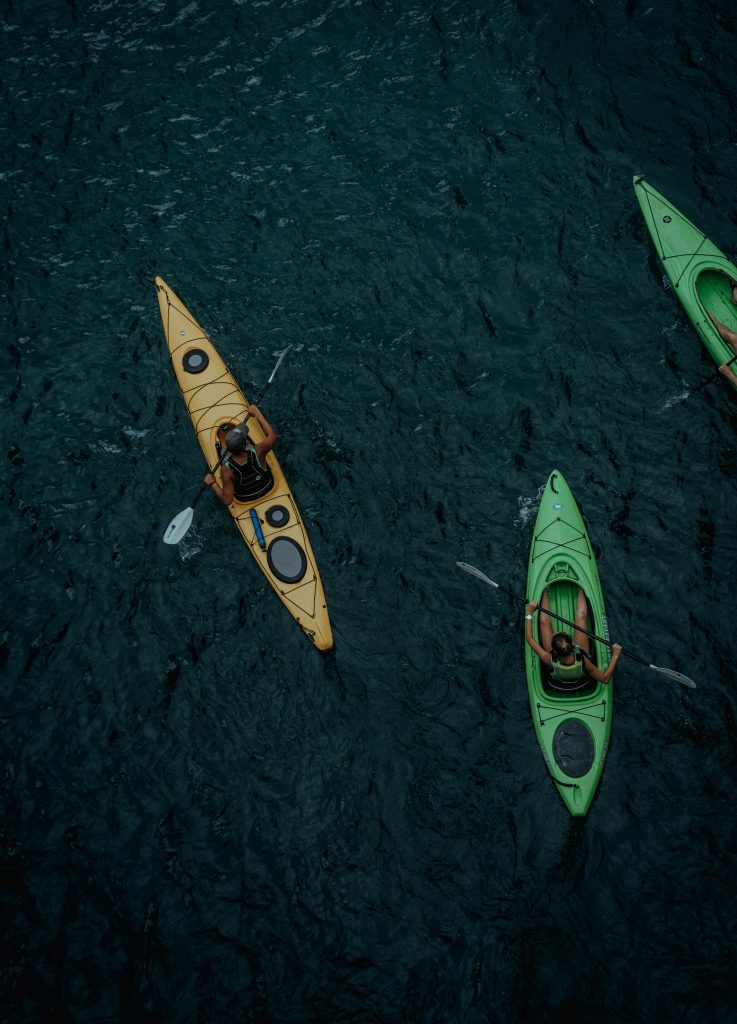
Calm water is the best-case scenario, and it’s the number most kayak rental counters quote: 20 to 30 minutes for an average paddler, faster for anyone in reasonable shape. Lakes and protected bays remove two of the three biggest variables current and chop leaving fitness and kayak type as the only real factors. how much does a kayak weigh matters here more than people expect: a heavier rental kayak loaded with dry bags and a cooler, moves noticeably slower than the same boat empty.
Against Wind, Current, or Chop
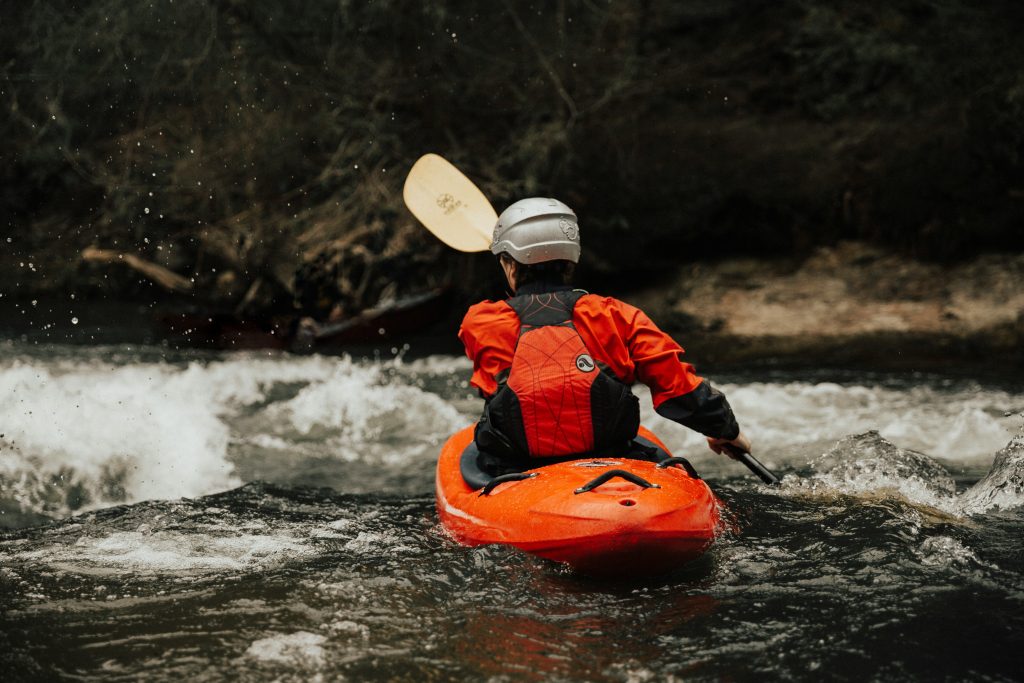
Add any one of these and the calm-water number stops applying. A 10-knot headwind can cut your speed by close to a full mile per hour. A 2 mph current against you does the same math in reverse, subtract it directly from your paddling speed. Paddle with that same current instead of against it, and you add it back, sometimes turning a 25-minute mile into 15 without paddling any harder. Open-ocean chop is trickier than either: it’s not just resistance, it burns energy on constantly correcting your line and bracing, which tires you out faster than flat-water paddling at the same speed.
Average Kayaking Speed: Beginner vs. Experienced Paddler
Experience changes your mile time more than almost anything else, including the kayak underneath you. A first-timer in an expensive touring kayak still paddles close to beginner speed for the first several outings, because an inefficient stroke wastes far more energy than a slower hull design ever costs. Technique, not equipment, is what separates a 30-minute mile from a 15-minute one.
Beginners typically paddle at 1.5 to 2.5 mph. Most of that slowness comes from three habits: using arms instead of torso rotation, gripping the paddle too tight, and over-correcting a kayak that naturally wants to zigzag a little. None of these are permanent most paddlers see a real jump in speed within their first three or four outings, often without any change in fitness at all.
Experienced paddlers hold 3 to 5 mph on the same water, in the same kayak type, mostly because their stroke transfers more power per pull and wastes less energy fighting the boat’s natural drift. Add a longer, narrower touring or sea kayak. Can one person use a 2-person kayak covers how boat choice interacts with paddler count — and that same experienced paddler can push past 5 mph in good conditions.
The honest takeaway: don’t buy a faster kayak to fix a slow mile time. Spend an afternoon on technique first — a 20-minute lesson on torso rotation does more for your pace than any upgrade in gear.
Is Kayaking a Mile Hard for a Beginner?
Physically, no — a mile is genuinely manageable for most reasonably able-bodied adults on calm water, even on a first try. Mentally and logistically, it can feel harder than it is, mostly because a mile looks short on a map and takes longer than people expect on the water.
Here’s the honest part competitors skip: your arms and shoulders will feel it the next day if you’ve never paddled before, especially your forearms from over-gripping the paddle. That soreness fades fast and isn’t a sign you did anything wrong, it’s just an unused muscle group getting its first real workout.
A few things make a beginner’s first mile noticeably easier:
- Renting a wider, more stable recreational kayak instead of a tippy touring model
- Starting on genuinely calm water — a protected bay or reef-sheltered shoreline, not open coastline
- Taking breaks whenever you want; a mile isn’t a race, and stopping to float doesn’t cost you anything but a few extra minutes
- Going with a guide the first time, so someone else is reading the wind and current instead of you
What actually makes a first mile harder than it needs to be: choppy afternoon conditions, a kayak loaded down with gear you don’t need, or pushing through discomfort instead of adjusting your grip and posture. None of that is about fitness — it’s about conditions and setup, which is exactly why timing and location matter as much as how many times you’ve been to the gym.
How Long Does It Take to Kayak 5 Miles?
Scale the same math up: at a recreational 2 to 3 mph pace, 5 miles takes most paddlers 1 hour 40 minutes to 2 hours 30 minutes of actual paddling time. Fitter paddlers in a touring kayak, holding 3.5 to 4 mph, cover the same distance in roughly 75 to 90 minutes.
Real trips rarely match that math exactly, and this is where a lot of pace calculators mislead people. Budget real-world time on top of paddling time: a water break every mile or two, a stop to reposition gear, or simply slowing down because your arms are more tired at mile 4 than they were at mile 1. For a realistic 5-mile day, plan on 2.5 to 3 hours door to door, not 2.
Five miles is also roughly the point where fitness starts mattering more than technique. A beginner who paddled a comfortable first mile can still struggle by mile 4 or 5 without any paddling-specific endurance — the muscles used for a steady 30-minute effort aren’t quite the same as the ones needed for two and a half hours. If you’re new to kayaking and planning a 5-mile trip, treat it like training for a long walk: build up with a couple of shorter outings first, rather than making your first-ever paddle a 5-mile one.
How Long Does It Take to Kayak 10 Miles?
Ten miles turns pace into a real planning problem, not just a fun fact. At a steady 2 to 3 mph, that’s 3 hours 20 minutes to 5 hours of paddling and almost nobody paddles that long without meaningful breaks, so plan on a 5- to 7-hour day once you add rest, food, and water stops. Experienced paddlers holding 4 mph in a touring kayak can do the paddling itself in about 2 hours 30 minutes, but even they typically split 10 miles across a longer day rather than racing straight through.
This distance is where kayak type stops being optional. A short, wide recreational kayak that felt perfectly fine for a mile becomes genuinely tiring at mile 7 or 8 — the extra effort needed to keep it tracking straight adds up over hours in a way it never does over minutes. A touring or sea kayak, built to hold a line with less correction, earns its keep on trips this long.
Ten miles in open water also isn’t a great first-timer goal, and any honest guide will tell you that instead of just selling you the trip. Sunburn, dehydration, and blistered hands from paddle grip are the three things that actually end 10-mile days early not lack of paddling skill. If you’re building up to this distance, a few 3- to 5-mile trips first will tell you more about your real pace than any chart, including this one.
How Many Miles Can You Kayak in an Hour or in a Day?
Per Hour
An average recreational paddler covers 2 to 3 miles in an hour, matching the same 2 to 3 mph pace used throughout this guide, hourly distance and mph are the same number, which makes this the easiest one to plan around. Push into a touring kayak or build some paddling fitness, and 3.5 to 4 miles an hour is realistic without racing yourself. Guides pace Kayak & Snorkel toursnd similar trips for the group and the wildlife, not for speed, building in regular stops for snorkeling or wildlife — so the actual distance covered often runs well under the hourly maximum on purpose.
Per Day
Daily distance depends far more on breaks than on paddling speed. A comfortable recreational day, with real stops for lunch, swimming, and rest, usually lands around 5 to 8 miles of actual paddling. Fitter paddlers on multi-day trips, pacing themselves instead of sprinting, often sustain 15 to 20 miles across a full day, but that’s a trained-for distance, not a first-outing one.
The honest limiting factor for most people isn’t muscle fatigue; it’s sun exposure and hydration. A paddler who could easily do 10 miles of movement will often call it at 6 or 7 because hours of direct sun and salt spray wear on you faster than the paddling itself does. Plan your day around shade and water breaks as much as mileage, and the distance tends to take care of itself.
How Fast Can a Kayak Go?
Recreational kayaks top out around 4 to 5 mph even with a strong paddler pushing hard, mostly because of a limit called hull speed — the point where a boat’s length caps how fast it can efficiently move through water, no matter how much effort goes into paddling harder. A short, wide 10-foot recreational kayak reaches that ceiling faster than a longer boat does.
Longer touring and sea kayaks, typically 14 to 18 feet, push that theoretical hull speed higher often into the 5.5 to 6.5 mph range because extra length raises the ceiling. Reaching it consistently still takes real fitness and technique; most paddlers cruise well below their kayak’s theoretical maximum, saving the top end for short bursts rather than a sustained pace.
Racing kayaks are a different category entirely. Narrow, low-drag hulls built purely for speed let trained paddlers sustain 5.5 to 6.5+ mph over real distances, with short sprint speeds running higher still. None of this is realistic for a casual mile, though it’s the ceiling, not the baseline, and chasing it on a first paddle usually just leads to a sore back and a zigzagging kayak.
For context on the water you’re actually likely to paddle: wind and current can matter more than any of these top-end numbers. A 5 mph paddling speed against a 3 mph current nets out at 2 mph — slower than a relaxed beginner on flat water, despite far more effort.
What Slows a Kayak Down (And What Speeds It Up)
Six factors explain almost every mile-time difference you’ll ever see:
- Kayak type and length. Short, wide recreational kayaks prioritize stability over speed. Longer touring and sea kayaks trade a little stability for a noticeably faster, more efficient glide.
- Wind direction. A headwind can cost close to a full mile per hour; the same wind at your back adds nearly as much. Crosswinds are the sneaky one — they push you sideways and force constant correction that slows you down without feeling like resistance.
- Current and tide. Paddling with a current adds its speed directly to yours. Paddling against it subtracts the same amount, which is why the same stretch of water can take twice as long round-trip.
- Paddling technique. Rotating your torso instead of just pulling with your arms transfers more power per stroke and wastes less energy — this single fix closes more of the gap between beginner and experienced pace than any equipment change.
- Load and passengers. Extra gear, a cooler, or a second paddler all add weight the kayak has to push through the water. A loaded tandem kayak can still be fast, but only if both paddlers pull their share.
- Fitness and fatigue. Speed at minute five and speed at minute forty-five aren’t the same number for most people. Building basic paddling endurance, even just a few practice sessions — protects your pace late in a trip more than raw strength does.
Fix the controllable ones technique, load, and timing around wind and you’ll close most of the gap between a slow mile and a fast one, regardless of which kayak you end up in.
Kayaking a Mile on Maui: What Actually Changes
Every number above assumes flat, current-free water, which describes very little of Maui’s coastline. West Maui’s reef-protected pockets, like the stretch off Olowalu Beach, come close on a calm morning, but “calm” here has a schedule, not a guarantee.
Trade winds build through the morning and typically fill in by 10 or 11 a.m., turning a relaxed 25-minute mile into real work by early afternoon. Locals and guides plan around this without thinking twice: launch early, finish by late morning, and treat any paddle scheduled for 1 p.m. as a different, harder trip than the same route at 8 a.m. Olowalu Beach guide covers the specific timing in more depth if you’re planning a self-guided visit.
Olowalu itself is a good example of why “calm water” needs a location attached to it. The first stretch of reef-protected shallows stays gentle most mornings, which is part of why it’s a common beginner and family launch point — but a few hundred feet further out, depth and exposure both increase, and the character of the paddle changes with them. Compare that to Launiupoko, a couple of miles north toward Lahaina, where more swell and less reef protection make it a better fit for paddlers who already have some ocean time behind them. Reading that kind of transition takes local knowledge a chart of mph numbers can’t give you — the real argument for a guide on your first Maui paddle rather than a rental alone.
Whale season adds a different kind of slowdown. From December through April, with the heaviest activity in January through March, federal guidelines ask boats and paddlers to keep at least 100 yards from humpback whales — and a whale can surface closer than that with no warning at all. Maui whale watching season guides who paddle these waters daily build in extra time during whale season for exactly this reason: not because the water itself is harder to paddle, but because the right response to a nearby whale is always to slow down and give space, not hold your pace.
None of this shows up in a generic pace chart, and it’s the actual reason a “how long does it take to kayak a mile” answer written for a lake in Ohio doesn’t quite hold up on Maui’s water.
FAQ: Quick Answers to Common Kayak Pace Questions
How long does it take to kayak 2 miles?
At a typical recreational pace of 2 to 3 mph, 2 miles takes 40 minutes to an hour of paddling. Add rest stops or photo breaks and budget closer to 75 minutes for a relaxed outing.
Can a beginner kayak a mile without stopping?
Most reasonably fit beginners can, yes — a mile at a slow, steady pace is well within reach for a first outing on calm water. Stopping isn’t a failure, though; plenty of experienced paddlers pause mid-mile just to enjoy the view.
Is 3 mph fast for a kayak?
It’s solid, not exceptional — 3 mph sits at the upper end of typical recreational pace and the lower end of what an experienced paddler in a touring kayak holds comfortably. Sustaining it for an hour or more takes real conditioning, even though it doesn’t feel fast in the moment.
Do tandem kayaks go faster than solo kayaks?
Yes, when both paddlers contribute evenly — two people paddling well can move a tandem kayak faster than either could paddle solo. One weak or mismatched paddler cancels out most of that advantage, sometimes making the tandem slower than a solo kayak instead.
How does wind affect kayak speed?
A headwind can cut your effective speed by close to a full mile per hour, while a tailwind adds a similar boost. Crosswinds are often the most tiring, since they push you off line and force constant small corrections rather than simply slowing you down.
Is it safe to kayak a mile alone?
On genuinely calm, familiar water, many experienced paddlers do this routinely. For open coastline, changing conditions, or unfamiliar water including most of Maui’s shoreline going with a guide or an experienced group is the safer call, since conditions can shift faster than a solo paddler can always read.
How far do guided kayak tours on Maui usually paddle?
Guided tours are paced for the group and the wildlife, not for speed, so the actual distance covered is often well under a mile of continuous paddling at any one stretch. Expect frequent stops to snorkel, look for turtles, or watch for whales in season, which matters more to most guests than covering ground quickly.
Does a kayak's weight affect how fast you paddle a mile?
Less than most people expect — length and hull shape matter far more than weight for cruising speed. Weight mainly shows up in how tiring a mile feels, not how fast you technically go, since a heavier boat takes slightly more effort to get moving and to correct off a straight line.
Bottom Line
A mile in a kayak takes most people 20 to 30 minutes on calm water — but “calm water” is doing a lot of work in that sentence, and on Maui, it usually means paddling before the trade winds arrive. Match your kayak, timing, and expectations to the water you’re actually on instead of a generic average, and the honest answer to how long does it take to kayak a mile becomes far less important than whether you picked the right morning to find out.