
Are Full Face Snorkel Masks Banned in Hawaii
are full-face snorkel masks banned in hawaii, why are full face snorkel masks dangerous, are full face snorkel masks safe, full face snorkel mask dangers
Are Full Face Snorkel Masks Banned in Hawaii
Are Full Face Snorkel Masks Banned in Hawaii
No law exists that makes it illegal to wear a full face snorkel mask in Hawaiian waters. But here’s the part that trips people up the majority of tour operators across Maui, Oahu, Kauai, and the Big Island won’t let you use one on their boats. And there’s a state advisory telling rental companies not to hand them out. So “banned” depends on who you ask and where you’re standing when you ask it.
If you’re planning a trip and you already own a full face snorkeling mask, read this before you throw it in your luggage.
Let's Kill the Myth First
Every few months, a new wave of travel bloggers runs a version of the headline “Hawaii bans full face snorkel masks!” It gets clicks. It also gets things wrong.
What actually happened is more complicated and honestly, more interesting. The state of Hawaii didn’t wake up one morning and declare these things illegal. What happened was slower and messier. Lifeguards started noticing a pattern in drowning incidents. A grieving husband whose wife died off the Big Island in 2016 started pushing state officials to investigate. Tour operators started comparing notes. And gradually, company by company, the guided snorkeling industry in Hawaii quietly moved these masks off their boats.
So the question “are full face snorkel masks banned in Hawaii” doesn’t have a clean yes or no answer. What it has is a history and that history matters if you’re trying to figure out what to pack.
The Drowning Data That Changed Everything
Here’s where things get serious.
Between 2009 and 2018, Hawaii averaged 21 fatal snorkeling drownings every year. That’s not a typo — snorkeling killed more people in Hawaii over that decade than swimming, surfing, and bodyboarding combined. By 2018, that annual number had jumped to 31.
Starting around 2016 and 2017, emergency responders began connecting dots between the spike in drowning incidents and the surge in full face snorkeling mask popularity. By 2018, nearly half of snorkeling-related drownings involved someone wearing a full face design. That’s a staggering number when you consider how recently these masks entered the mainstream market.
Now, to be fair researchers and coroners stopped short of saying the masks directly caused those deaths. Autopsies are messy. Many of the victims were older visitors with underlying heart conditions. CO₂ poisoning and cardiac arrest can look similar in a post-mortem. The data pointed toward a problem, but didn’t hand anyone a smoking gun.
What it did hand them was enough of a reason to act. And so they did.
The Hawaii Department of Agriculture issued a formal advisory not a law, not a fine, not a criminal penalty, but an official recommendation urging snorkeling operators and rental shops to stop putting full face snorkel masks in the hands of customers, especially beginners. Most of the industry complied, not because they had to, but because the math wasn’t looking good.
So Why Are These Masks Even Controversial? The CO₂ Problem Explained
When you breathe out, you’re exhaling air that’s heavy with carbon dioxide. With a traditional snorkel, that air exits through the tube above the water. Simple. Clean. Decades of testing behind it.
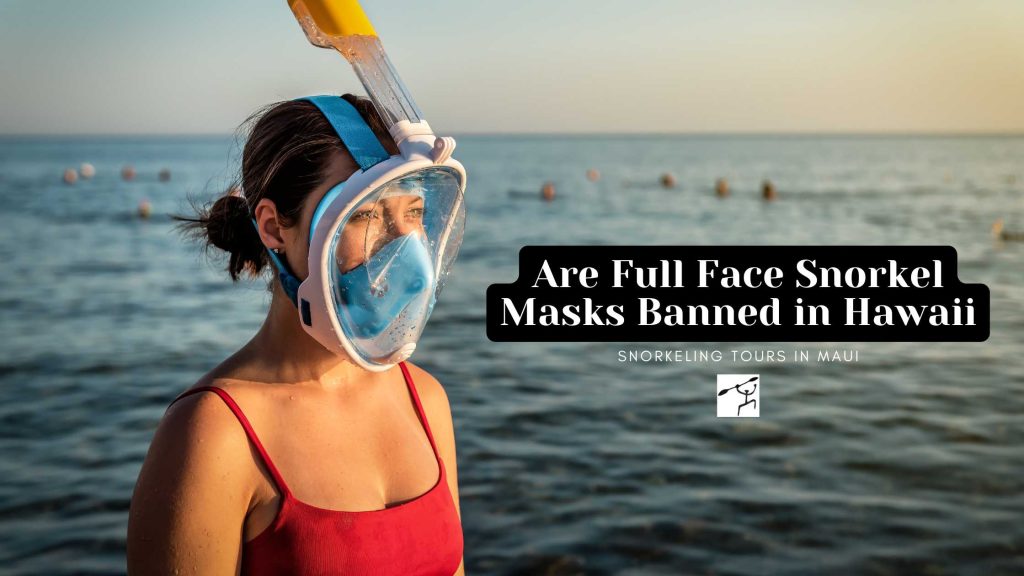
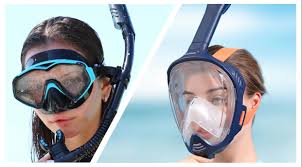
With a full face snorkeling mask, things get murkier. The exhaled air enters a sealed chamber that covers your whole face. Well-engineered masks and there are some genuinely good ones out there use separate intake and exhaust channels with one-way valves that push the CO₂ out before you rebreathe it. When those systems work correctly, the mask performs fine.
The problem is that the consumer market got absolutely flooded with cheap knockoffs from manufacturers who copied the look of the good masks without copying the engineering. No proper valve tolerances, no verified airflow paths, no quality control worth mentioning. These masks look almost identical on a store shelf or an Amazon listing. The average tourist has no way to tell them apart.
When CO₂ builds up inside the mask during use, the effects come on quickly. Dizziness. A weird tingling in the fingers. Sudden disorientation. In calm water, you might catch yourself and pull the mask off in time. In open ocean, with any kind of current or chop, that window closes fast.
Beyond the CO₂ issue, these masks bring a handful of other problems into the water with them:
Getting one off in a hurry isn’t easy. The harness system that holds a full face snorkeling mask in place requires multiple deliberate steps loosening straps, breaking the seal, lifting over the head. A calm person on dry land can do it in ten seconds. A panicking person treading water in four-foot swells might not manage it at all.
You also can’t talk. Drop a traditional mouthpiece and you can shout to your guide. Seal your entire face inside a mask and you’re communicating in hand signals only which most first-time snorkelers haven’t practiced.
And then there’s fogging. Cheaper full face snorkeling masks fog up constantly during use, leaving the snorkeler temporarily blind in open water. If you’re committed to using one, how to keep your snorkel mask from fogging is genuinely worth reading before you get in the water but that disorientation, minor as it sounds on paper, has contributed to real incidents in Hawaii.
Are Full Face Snorkel Masks Better? The Real Comparison
This is the question behind the question for most people shopping for gear and honestly, it deserves a full answer on its own. The short version is below, but if you want the complete breakdown, we’ve covered are full face snorkel masks better in depth separately.
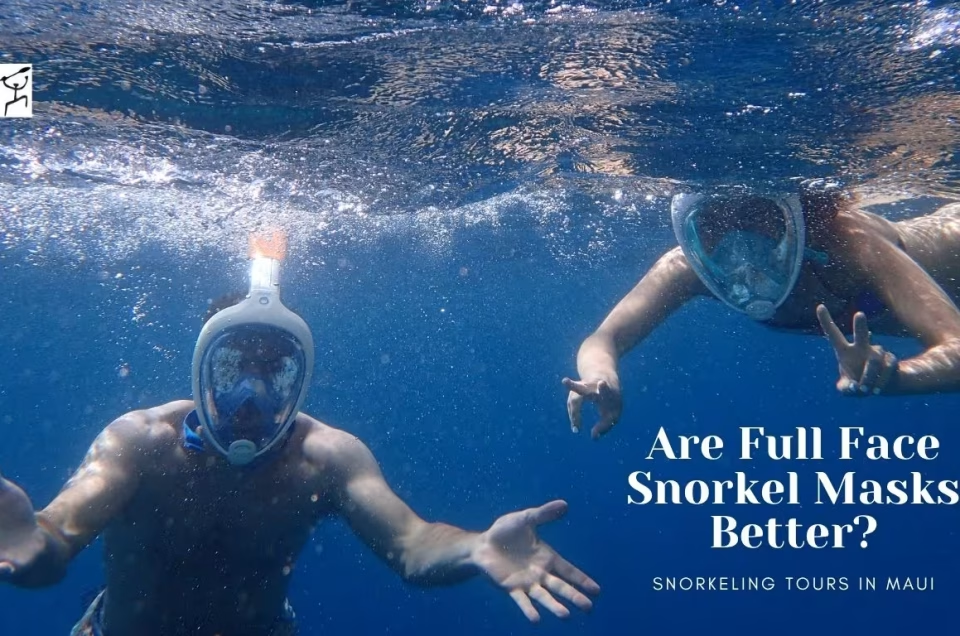
The marketing makes a compelling case panoramic 180-degree vision, breathe naturally through your nose, no jaw cramps from biting a mouthpiece all afternoon. So are full face snorkel masks better?
Honestly? It depends entirely on what you mean by “better” and where you’re planning to use one.
In a swimming pool, or in a calm, sheltered lagoon where the water is knee-deep and a lifeguard is 30 feet away sure, the comfort advantages are real. Beginners who’ve always struggled with traditional masks sometimes take to the full face design immediately. Less anxiety, easier breathing rhythm, wider view.
But in Hawaii’s open ocean? The calculus flips.
A traditional mask clears fast. If water gets in, you blow it out. Done. A full face snorkeling mask, by contrast, has to come completely off your head to drain properly and that’s a multi-step process you really don’t want to be doing with a wave breaking over you.
Traditional gear lets you talk. This sounds trivial until you’re struggling and need to signal your guide, or you want to tell your kid to watch out for the coral five feet to their left.
Traditional masks fit virtually every guided tour in Hawaii. Your full face snorkeling mask might be sitting in a pile on the dock while the boat leaves without you.
And traditional snorkel setups have forty years of field-tested refinement behind them. The design works. It’s proven. The failure modes are well understood and the fixes are simple.
That said if you’re an experienced snorkeler, you’ve used your full face snorkeling mask before in similar conditions, it’s from a reputable brand with proper CO₂ engineering, and you’re snorkeling independently at a calm beach you’re in a different situation than the first-time visitor renting mystery gear from a hotel kiosk. Context matters.
The Tour Operators That Said No
The list of Hawaii operators that have formally restricted or outright banned full face snorkel masks reads like a who’s-who of the state’s guided snorkeling industry.
Pride of Maui was among the first major catamaran operators to go public with a ban. CEO Scott Turner explained it plainly: as more guests showed up with full face snorkeling masks, his crew found themselves constantly pulled away from other guests to help people struggling to remove them. That pattern was the tell.
Maui Adventure Tours Kayak & Snorkeling Co. in Lahaina updated its policies to prohibit full face snorkeling masks on its Lanai excursions, saying the risks outweighed the benefits while research was still incomplete which is a candid and honest position for a business to take publicly.
Snorkel Bob’s, which operates rental locations across four Hawaiian islands, never carried full face designs in its more than 30 years of business. The owner bought one, tested it, and decided it was, in his words, “a terrible thing.” That story has stuck around because it’s honest about how the decision was made instinct backed up by firsthand testing, not a corporate committee.
Manta Ray Advocates banned them from their moonlight manta swims after a guest hyperventilated in a full face mask during a tour and had to be escorted back to shore, leaving the rest of the group unattended. That single incident made the decision obvious.
Dolphins and You / And You Creations in Oahu implemented a ban based on similar experiences and now provides all guests with traditional gear as part of the tour package.
If you’re booking any guided snorkeling experience in Hawaii and the operator hasn’t explicitly said full face snorkeling masks are welcome assume they’re not.
What Should You Actually Use?
If you’re heading to Hawaii and want to snorkel well, here’s the practical gear picture:
A silicone-skirted traditional mask is your best starting point. Silicone conforms to your face better than rubber, creates a more reliable seal, and lasts longer. Look for tempered glass lenses and an adjustable strap. Try it on in the store the fit is everything.
A dry snorkel is worth the small upgrade over a basic tube. The float valve at the top closes automatically when you submerge, so you’re not constantly getting a mouthful of ocean. For beginners, this eliminates the most intimidating part of learning to snorkel.
Fins most operators include them, so don’t buy before you know what your tour provides. If you’re going independent, open-heel adjustable fins work for most people and pair well with thin reef shoes.
Reef-safe sunscreen isn’t optional in Hawaii the state has banned oxybenzone and octinoxate, the active ingredients in most standard sunscreens, because of their documented harm to coral reefs. Mineral sunscreen with zinc oxide, or a full-coverage rash guard, are your alternatives.
One more thing: whatever gear you bring, test it in shallow water before you swim out. Five minutes near shore to check the seal, clear the snorkel once or twice, and make sure nothing is pinching or leaking will save you a lot of grief 50 yards out.
What To Do If You Already Own a Full Face Snorkeling Mask
You spent $60 on one, it came with good reviews, and now you’re reading this with mild dread. Here’s a reasonable path forward.
Call or email your tour operator before you travel. Ask directly: “Do you allow full face snorkel masks on your tours?” Some smaller operators in Hawaii still permit high-quality branded models not many, but some. Confirm before you assume.
If you’re doing any guided tour, plan to use their gear. Most operators providing traditional masks and snorkels supply quality equipment better than the average tourist would rent independently. Use what they give you.
If you’re planning independent snorkeling only at places like Hanauma Bay, Kapalua Bay, or Kealakekua you have more flexibility, but the state advisory still applies. If you choose to use a full face snorkeling mask in Hawaiian waters on your own, at minimum make sure it’s from a brand with verified CO₂ engineering (Ninja, Head/Mares, and Ocean Reef are the names that come up most often in safety discussions), snorkel with a buddy, stay close to shore, and test the gear before you go anywhere near deep water.
And if there’s any doubt in your mind about the mask’s quality leave it at home. The ocean doesn’t care what your Amazon listing said.
The Bigger Picture: Hawaii's Ocean Is Spectacular and Unforgiving
There’s a reason Hawaii sees more snorkeling-related fatalities than virtually any other destination: millions of people show up to snorkel in open Pacific water with zero experience, rented or borrowed gear, and no awareness of local conditions. The ocean looks like a postcard. It performs like something else entirely.
Full face snorkeling masks became part of that problem because they appealed most strongly to exactly that demographic people who’d struggled with traditional gear before, or who’d never snorkeled and wanted something that promised an easier entry point. The marketing found its audience. The ocean found them too.
This isn’t meant to scare you off. Snorkeling in Hawaii is genuinely extraordinary sea turtles, reef fish, coral formations that look like something out of a nature documentary. With the right gear and a little preparation, it’s accessible to almost anyone in reasonable health.
Just go in with honest expectations and the right equipment. The water will hold up its end of the deal.
Frequently Asked Questions
Are full face snorkel masks banned in Hawaii? Not by law, no statewide legislation makes them illegal. But the Hawaii Department of Agriculture issued an official advisory urging operators not to provide them, and the vast majority of guided tour operators across the islands have banned them as a precautionary safety measure. For most visitors, this means full face snorkel masks are effectively off-limits for any guided snorkeling experience.
What made Hawaii raise concerns about these masks? A combination of factors: a high-profile drowning incident in 2016 involving a full face snorkel mask, followed by data showing nearly half of snorkeling-related drownings in Hawaii by 2018 involved this mask style. The main technical concern is CO₂ buildup in low-quality models, alongside the difficulty of removing them quickly in emergencies.
Are full face snorkel masks better than traditional masks? In calm, controlled conditions they offer comfort advantages natural breathing, wider field of view, less jaw fatigue. In Hawaii’s open ocean, traditional masks are the safer and more practical choice: they clear faster, allow verbal communication, come off in seconds, and are accepted on every guided tour in the state.
Which operators have banned full face snorkeling masks in Hawaii? Pride of Maui, Hawaii Ocean Project, Snorkel Bob’s, Manta Ray Advocates, and Dolphins and You are among the most well-known to have implemented bans. The list has grown considerably since 2019. Always confirm your specific operator’s policy before arriving.
Can I snorkel independently in Hawaii with a full face mask? Yes, no law prevents it. But the state advisory recommends against it, particularly for beginners. If you choose to snorkel independently, use only a reputable brand, always snorkel with a buddy, stay in calm and shallow conditions, and thoroughly test your gear before heading into open water.
What should a first-time snorkeler in Hawaii use? A properly fitted traditional mask paired with a dry snorkel is the safest and most practical option. Many tour operators provide quality silicone gear as part of their package often better than what you’d buy or rent independently. Practice clearing the snorkel in shallow water first and you’ll feel comfortable within minutes.
Did people actually die from using these masks in Hawaii? Multiple fatalities in Hawaii have involved snorkelers wearing full face masks, beginning with the 2016 incident off the Big Island. Whether the masks directly caused those deaths or were incidental to other medical events remains scientifically contested. The pattern was alarming enough to prompt state advisories and widespread industry bans regardless.
What are the best alternative masks to use in Hawaii? High-quality traditional masks from brands like Cressi, Scubapro, or Mares paired with a dry snorkel are the go-to recommendation from Hawaii’s ocean safety community. Look for silicone skirts, tempered glass lenses, and a purge valve on the snorkel. Most major tour operators in Hawaii provide gear of this standard or better as part of your booking.
Always verify current operator policies and ocean conditions before snorkeling in Hawaii. Guidelines and tour rules can change. For real-time ocean safety information, check with your local lifeguard station or the Hawaii Ocean Safety division.