


are full face snorkel masks better
are full face snorkel masks better
are full face snorkel masks better
are full face snorkel masks better
are full face snorkels actually better than traditional masks, full face snorkel mask safety, how do snorkeling masks work
Full face snorkel masks are better for beginners and casual surface snorkeling. They let you breathe naturally through your nose and mouth, offer a wider field of view, and fog less than traditional masks. However, they are not suitable for diving below the surface, rough water conditions, or experienced snorkelers who want more control. If you’re a first-timer building a snorkeling outfit for a trip especially snorkeling in Maui a full face mask from a reputable brand is likely the better starting choice.
The first time I strapped on a full face snorkel mask, I was standing waist-deep in the warm, impossibly clear water off Ka’anapali Beach in Maui. A guy next to me probably mid-50s, clearly a first-timer was struggling with a traditional snorkel, coughing salt water, yanking the mouthpiece out every thirty seconds. Meanwhile, I just… breathed. Normally. Like I was sitting on my couch. And I remember thinking: this changes everything.
Except it doesn’t. Not entirely. That’s the honest answer, and I’ll get to why.
But first, let’s talk about why this question even matters. If you’re putting together a snorkeling outfit for a trip whether it’s snorkeling in Maui, exploring the Florida Keys, or drifting above a coral reef in Thailand the mask you choose is probably the single most important gear decision you’ll make. Get it wrong and you spend the whole trip miserable. Get it right and you forget you’re even wearing equipment.
What Is a Full Face Snorkel Mask?
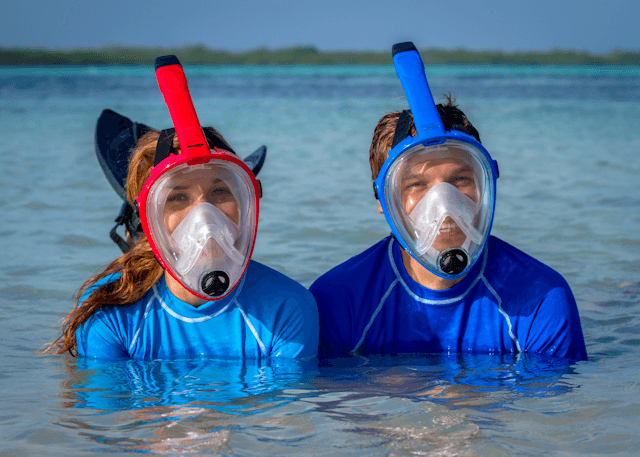
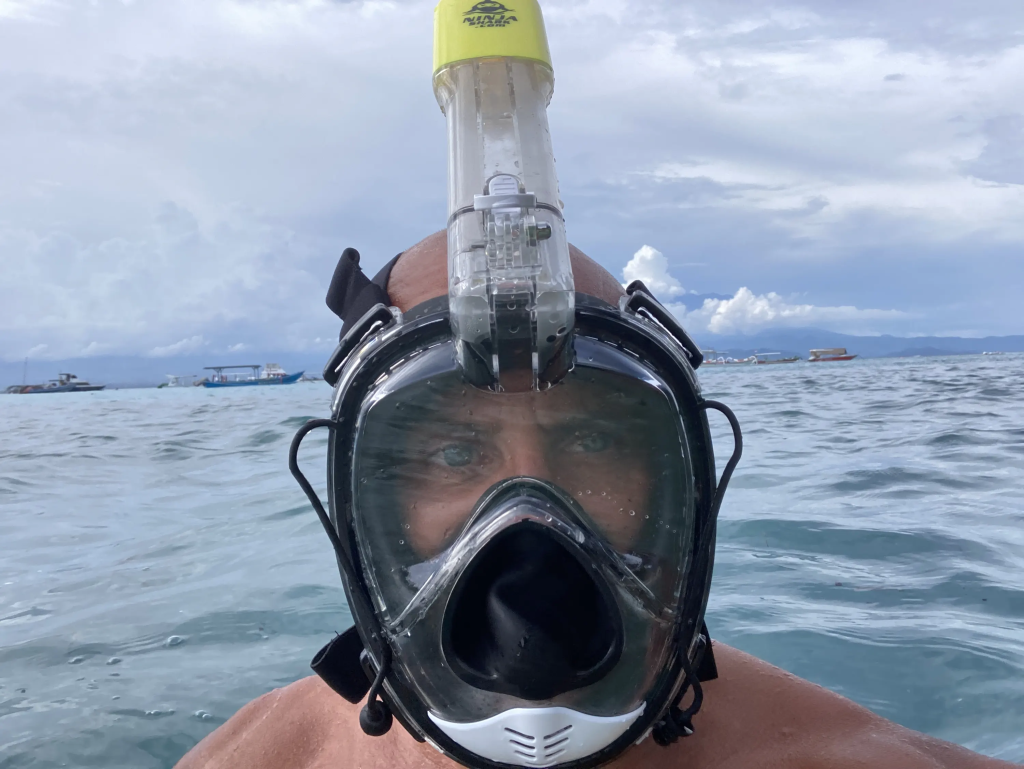
A full face snorkel mask covers your entire face nose, mouth, and eyes in one integrated unit. The snorkel tube extends from the top of the mask, and you breathe naturally without holding anything between your teeth. The lens wraps around for a wide, panoramic field of view. It looks, honestly, a little like something from a sci-fi movie.
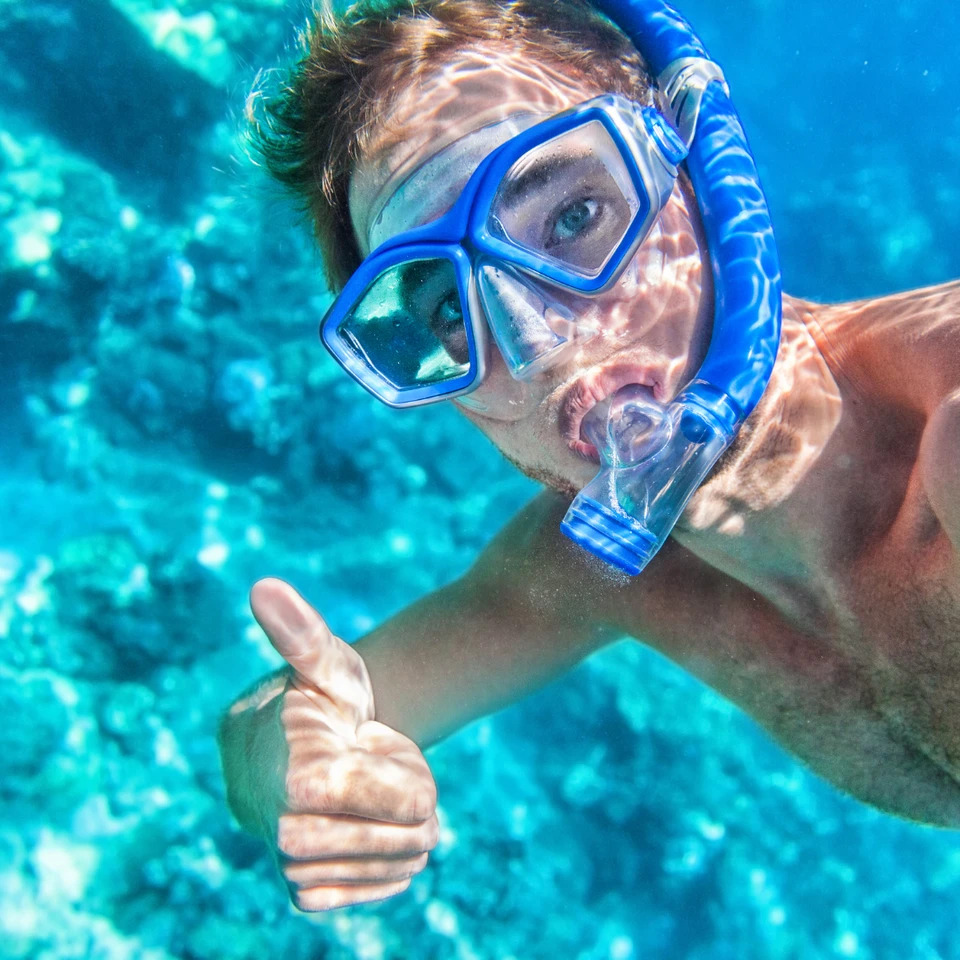
Traditional masks cover just your eyes and nose, and you breathe through a separate J-shaped tube held in your mouth by a silicone mouthpiece. It’s the classic setup. The one your dad used. The one you probably learned on as a kid.
So are full face snorkel masks better? Here’s the honest side-by-side most people actually need.
When it comes to breathing, full face masks win easily. You breathe naturally through your nose and mouth no mouthpiece, no clamping, no adjustment period. Traditional masks require you to grip a silicone tube between your teeth the entire time, which takes real getting used to, especially for first-timers.
Field of view goes to full face masks as well. The wraparound lens gives you a wider, more panoramic perspective underwater. Traditional masks are narrower, and while experienced snorkelers don’t miss what they can’t see, beginners definitely notice the difference.
Fogging is less of a problem with full face designs, thanks to their built-in airflow systems. Traditional masks fog more readily, though anti-fog spray helps. On the flip side, if your traditional mask does flood, clearing it is quick and simple something every snorkeler learns in the first five minutes. Clearing a flooded full face mask mid-swim is a far more stressful experience.
The biggest limitation of full face snorkel masks is that they simply aren’t built for going below the surface. The enclosed air volume makes pressure equalization difficult, so any diving or duck-diving is essentially off the table. Traditional masks handle that without issue.
Safety is also worth flagging here. Traditional masks carry minimal CO2 risk. Full face masks particularly cheap, unbranded ones can have poorly separated breathing chambers, which means re-breathing exhaled air. Reputable brands have addressed this in their designs, but it makes brand selection genuinely important, not just a preference.
And for beginners? Full face masks are far more approachable. Traditional masks have a learning curve. Not a steep one, but enough to rattle a nervous first-timer and turn a beautiful reef experience into an uncomfortable slog.
The Real Advantages of Full Face Snorkel Masks
The breathing thing is real. Seriously, it’s not hype. When you breathe through a traditional snorkel, you’re pulling air through a narrow tube with a mouthpiece clamped between your teeth. It takes getting used to, and for nervous or first-time snorkelers, that adjustment can ruin the whole experience before it even starts. Full face masks eliminate that learning curve almost entirely. You breathe like you’re standing on the beach.
For families putting together a snorkeling outfit especially for kids or elderly relatives that alone is worth serious consideration. I’ve watched grandparents who’d never snorkeled in their lives float peacefully over reef fish in Maui within minutes of putting one on. No gagging, no panic, no swallowed water. That’s not nothing.
The panoramic view is another genuine win. Traditional masks give you a fairly narrow field of vision. Full face designs wrap around the face at a wider angle, which means you catch movement in your peripheral vision more naturally. When a sea turtle glides past three feet to your left, you want to see it.
Fogging, too, is less of an issue. Traditional masks fog when the inside temperature differs from the water a constant annoyance. Full face masks are designed with airflow systems that circulate air across the lens. In my experience, they fog significantly less. Not never. Less.
Where Full Face Snorkel Masks Fall Short
Here’s where I have to be straight with you, because a lot of promotional content glosses over this stuff.
Full face snorkel masks are built strictly for staying on the surface the moment you try to go under, you’re fighting the design. The design traps a larger air volume, which makes equalizing pressure as you descend difficult sometimes impossible. If you want to dive down and explore a sunken anchor or swim through a coral arch, you’re going to struggle.
There’s also the CO2 buildup issue, which made headlines a few years back and is worth understanding. Some earlier full face mask designs didn’t adequately separate the inhalation and exhalation chambers, meaning you could re-breathe your own exhaled CO2 leading to dizziness, headache, and in extreme cases, loss of consciousness in the water. The better brands have since redesigned to address this and if you’re snorkeling in Maui specifically, it’s worth knowing whether full face snorkel masks are even allowed in Hawaii before you pack one.
And then there’s the communication problem. Want to point out a fish to your buddy? With a traditional snorkel you pop the mouthpiece out and say something. With a full face mask, you’re pulling the whole thing off your face. Minor thing until it isn’t. (Underwater hand signals become your best friend, which is fine, but it’s an adjustment worth knowing about before you’re already in the water.)
Snorkeling in Maui: Does Your Mask Choice Actually Matter Here?
It does. Maui is a great case study because the snorkeling conditions vary dramatically across the island.
At calmer spots like Molokini Crater or the waters off Wailea, a full face mask is genuinely wonderful. You’re floating on the surface, visibility is often 80 to 100 feet, and you’re watching Hawaii’s state fish — the humuhumunukunukuapua’a, yes that’s a real word dart around below you. Calm water, relaxed pace, no need to dive. Full face masks shine here.
But at places like Honolua Bay in winter, or anywhere with surge and choppiness, full face masks can get uncomfortable fast. Water can enter around the seal if waves are slapping you around, and because the mask covers so much of your face, recovering from a flooded mask mid-swim is significantly more stressful than clearing a traditional one.
Honestly? If I’m helping someone build a snorkeling outfit for Maui and it’s their first time, I’d still recommend a full face mask for the calm bay spots. But I’d want them to rent before they buy, and I’d want them choosing a reputable brand.
Building the Right Snorkeling Outfit
Your mask is just one piece of a snorkeling outfit, and people underestimate how much the rest of the gear matters.
Fins are probably the second most important thing. Even basic open-heel fins give you far more control in the water than trying to swim without them. In Maui especially, where currents can shift unexpectedly, fins aren’t optional.
A rash guard or thin wetsuit a shorty, usually 2mm to 3mm in Hawaii’s 75-78°F water serves double duty: sun protection and warmth. Snorkeling in Maui without UV protection is how you end up with a spectacular sunburn on your lower back, the part of your body facing the sun the entire time you’re floating face-down. I learned that the hard way, years ago, on my first trip to Lahaina. Won’t make that mistake again.
Actually, let me rephrase that it’s not just Maui. Any snorkeling destination at tropical latitudes will do the same to you. The water feels cool enough that you don’t notice the burn until you’re back at the hotel, looking like a lobster in board shorts.
Full Face vs. Traditional Mask: Who Should Use Which?
Here’s what most comparison articles miss: these two mask types aren’t really competing for the same snorkeler. They serve different people.
Choose a full face snorkel mask if you are: a beginner, a casual surface snorkeler, someone who gets anxious with a mouthpiece, an older swimmer, or anyone doing relaxed, calm-water observation. That’s most leisure travelers. And that’s perfectly fine.
Choose a traditional mask if you are: an experienced snorkeler, a free-diver, someone snorkeling in rougher conditions, anyone who wants to descend below the surface, or a person who prioritizes easy mask-clearing and buddy communication.
Think of it like the difference between an automatic and a manual transmission. The automatic is easier in traffic smoother, less effort, perfectly fine for most people most of the time. But if you want to take it up into the mountains and really feel what you’re doing, you want the control of a stick shift. Same logic applies here.
My Honest Recommendation
The real answer isn’t a simple yes or no, it depends entirely on who’s wearing the mask and what they’re trying to do in the water.
For a first-timer building a snorkeling outfit for Maui? Yes, very likely better. For someone with a few seasons of experience who wants to explore reefs more dynamically? Probably not.
For anyone who’s new to snorkeling or hasn’t been in the water for a while, starting with a trusted full face mask brand — Ocean Reef, Tribord, and Seaview are solid choices makes the whole experience a lot less stressful. Avoid no-name bargain models for safety reasons. Rent one first if you can. See how it feels.
The truth is both mask types have a place. And the more time you spend in the water, the more clearly you’ll understand which one fits the moment.
Frequently Asked Questions
Are full face snorkel masks better than traditional masks? Full face snorkel masks are better for beginners and casual surface snorkeling because they allow natural breathing through the nose and mouth, reduce fogging, and offer a wider field of view. Traditional masks are better for experienced snorkelers, freediving, rough water, and anyone who needs to descend below the surface.
Are full face snorkel masks safe? Yes, full face snorkel masks are safe when purchased from reputable brands that properly separate the inhalation and exhalation airflow chambers to prevent CO2 buildup. Avoid cheap, unbranded versions. Always ensure the mask fits your face correctly before entering the water, and limit continuous use to 20-30 minutes.
Can you go underwater with a full face snorkel mask? No. Full face snorkel masks are designed for surface snorkeling only. The larger enclosed air volume makes it difficult or impossible to equalize ear pressure when descending. For any freediving or duck-diving below the surface, use a traditional two-piece setup — separate mask and snorkel.
What is the best snorkeling outfit for Maui? The best snorkeling outfit for Maui includes a well-fitting mask (full face for beginners, traditional for experienced snorkelers), open-heel or full-foot fins, a rash guard or 2-3mm shorty wetsuit for sun protection, and a snorkel vest if you’re a less confident swimmer. Renting gear on-island is smart for first-timers before committing to a purchase.
How do I stop my snorkel mask from fogging? Full face snorkel masks resist fogging better than traditional masks due to their airflow design. For traditional masks, apply commercial anti-fog spray or a small amount of baby shampoo to the inside of the lens, rinse lightly, and don’t wipe dry before use. Here’s a deeper breakdown of exactly how to keep your snorkel mask from fogging.
How long can you wear a full face snorkel mask? Most manufacturers recommend sessions of 20-30 minutes with breaks in between. Prolonged use — especially with physical exertion — can increase CO2 buildup risk. Always snorkel with a buddy. If you feel dizzy, lightheaded, or short of breath, surface and remove the mask immediately.
Whether you’re snorkeling in Maui for the first time or gearing up for a Caribbean reef trip, the best snorkeling outfit is the one that keeps you safe, comfortable, and in the water longer. Pick the right mask for your level and go see what’s down there.