

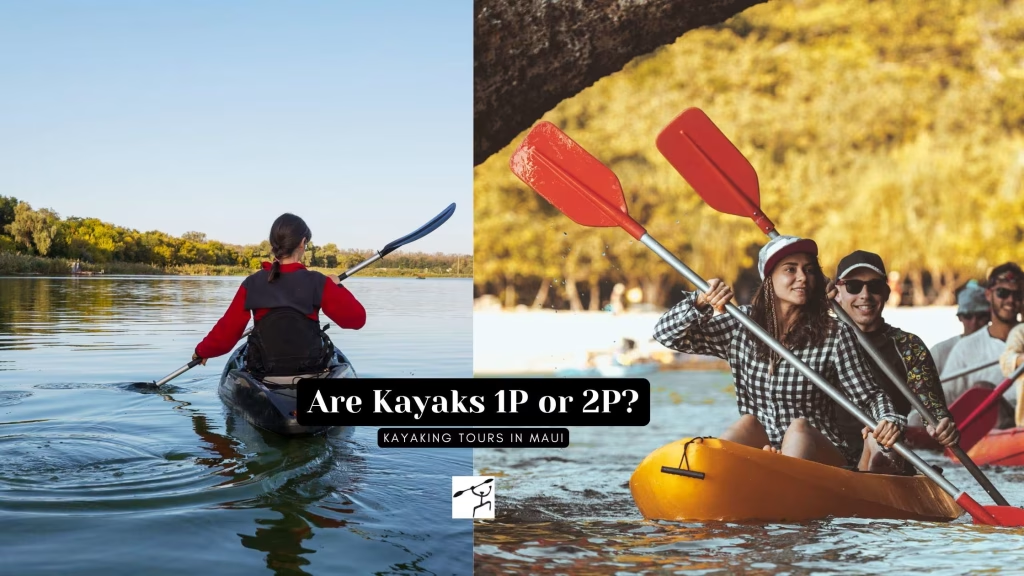
Are Kayaks 1P or 2P
Are Kayaks 1P or 2P,
Are Kayaks 1P or 2P,
Are Kayaks 1P or 2P,
Are Kayaks 1P or 2P,
are kayaks single or double, one person vs two person kayak, 1 person kayak vs 2 person kayak, solo kayak vs tandem kayak, should I get a single or tandem kayak, kayak for one or two persons, tandem kayak or single kayak, best kayak for beginners solo or tandem, difference between 1p and 2p kayak, choosing between solo and tandem kayak
Are kayaks 1P or 2P? Both — kayak makers build them in one-person (1P) and two-person (2P) versions. A 1P kayak is a solo boat built for a single paddler; a 2P, or tandem, kayak is built for two people paddling together. Neither is the “better” option on its own. A 1P kayak gives you full control and a lighter, more agile ride. A 2P kayak trades some of that independence for stability, shared effort, and room for a partner. The right one comes down to who’s paddling with you, how confident you are on the water, and what kind of morning you’re after.
This is one of the first questions anyone comparing a solo kayak vs tandem kayak runs into before a trip. Here’s exactly how the two stack up, who tends to be happiest in each, and how to decide before you book a kayak tour in Maui.
Quick Comparison: 1P vs. 2P Kayaks
If you’re trying to pin down kayak weight capacity and other basics before you book, here’s the short version:
| Factor | 1P (Solo) Kayak | 2P (Tandem) Kayak |
|---|---|---|
| Seats | 1 | 2 (some setups fit two adults plus a small child) |
| Typical weight capacity | ~250–300 lbs | ~500–600 lbs |
| Length | Shorter, lighter | Longer, usually 12–14+ ft |
| Steering | Entirely yours | Shared — works best in sync |
| Paddling effort | All on you | Split or alternated between two |
| Stability | Nimble, slightly narrower | Wider, steadier |
| Best for | Solo travelers, anglers, confident swimmers | Couples, families, beginners paired with a stronger paddler |
Exact numbers vary by kayak model, so treat these as general ranges rather than a spec sheet. If you’re close to a weight limit, it’s worth confirming with your guide before you book.
What Is a 1P (Solo) Kayak?
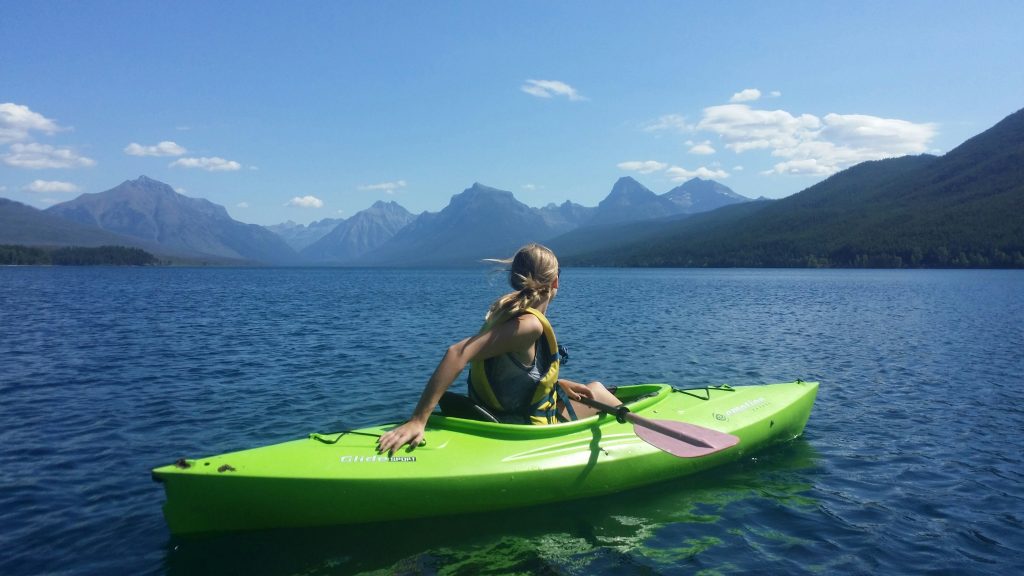
A 1P kayak seats one paddler, full stop. With only one person’s weight to move through the water, these kayaks are shorter, lighter, and quicker to turn — you can feel the difference the moment the paddle hits the water.
Where a solo kayak wins:
- Full control. Every stroke, turn, and pace change is entirely up to you.
- Agility. It’s easier to slip into calmer pockets of water or double back for a better look at something in the reef.
- Independence. A natural fit for anglers, photographers, or anyone who’d rather set their own rhythm than negotiate one.
- A quieter approach. Solo kayaks tend to move with less splash, which matters if you’re hoping to get close to a sea turtle without spooking it.
Where it falls short: there’s no backup paddler if your arms get tired, and no second seat if you’re traveling with a partner or child who wants to share the boat.
What Is a 2P (Tandem) Kayak?
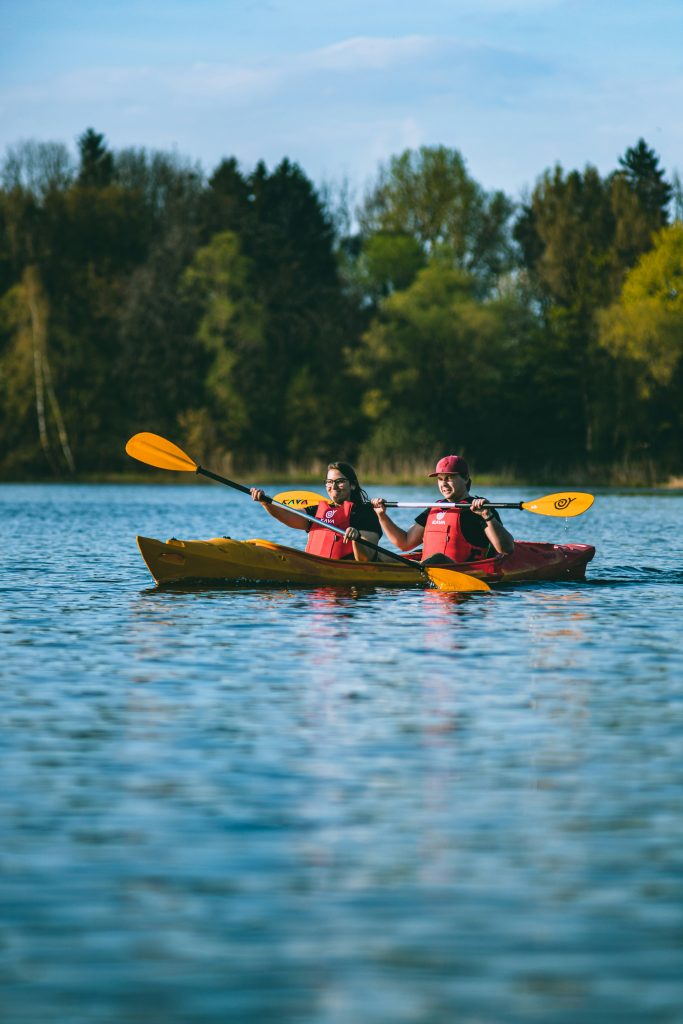
A 2P kayak also called a 2 person kayak or tandem kayak seats two paddlers, usually one in front and one in back, and is built longer and wider to carry the extra weight safely. That added length and width is also what makes it noticeably steadier on the water.
Where a tandem kayak wins:
- Shared effort. When one paddler tires, the other can carry more of the load, or you can trade off completely.
- Built-in reassurance for beginners. Pairing a nervous first-timer with a more experienced paddler takes most of the intimidation out of the first few minutes on the water.
- Extra stability. The wider hull makes tandems a comfortable, confidence-building choice for anyone who’s never kayaked before.
- Shared moments. You’re in the same boat, literally, for the turtle sighting or the whale breach — instead of hoping your paddling partner saw it too.
Where it falls short: steering is a two-person job, so if you and your partner aren’t paddling in rhythm, the kayak can zig-zag more than either of you would like. It’s also heavier and less nimble than a solo kayak.
Most tandem kayaks can be paddled by one person from the back seat, with gear shifted forward to balance the weight. It’s doable — just less efficient than a kayak actually built for one.
One Person Kayak vs. Two Person Kayak: How to Decide
A few quick rules of thumb, based on who’s coming with you:
- Traveling as a couple? Most pairs choose a tandem. It keeps you together and turns the paddle into part of the experience rather than two separate workouts.
- Bringing the kids? A 2P kayak lets a parent paddle while a child rides along, without needing a second boat.
- Traveling solo, or just want your own pace? A 1P kayak is the more natural fit.
- First time in a kayak, and a little nervous? Pair up in a tandem with someone more experienced, or with your guide.
- Small group of friends? Mix and match — some in solo kayaks, some in tandems — so everyone gets the setup they actually want.
- Chasing the perfect photo or a closer look at marine life on your own terms? A solo kayak gives you the freedom to hang back or move in without checking with anyone else first.
Choosing 1P or 2P for a Maui Kayak Tour
Whichever fits you on paper, a few things about paddling in Maui are worth knowing before you book:
- Mornings are calmer. Trade winds tend to build through the day, so earlier tours generally mean smoother water — a bigger deal in a 1P kayak, which sits lower and lighter than a tandem.
- The reef rewards a slow approach. Around Olowalu, sea turtles and reef fish are used to kayaks passing over, but a quiet solo approach can get you closer than a tandem with two paddles splashing.
- Whale season changes the math. From roughly December through April, having a second person aboard means one of you can watch the horizon for a breach while the other keeps paddling — a real advantage on a kayak whale watch tour.
- You don’t have to decide alone. Both single and tandem kayaks are available on our kayak and snorkel tour at Olowalu, and our guides can help match you to the right one once they know your group and comfort level.
Frequently Asked Questions
Can one person paddle a two-person (2P) kayak alone? Yes. Sit in the back seat and shift gear or a dry bag toward the front to balance the weight. It works, though a solo kayak will always feel lighter and more responsive.
Is a tandem kayak harder to paddle than a solo kayak? Not harder, just different. It takes two people paddling in rhythm rather than one person doing all the work, and a little coordination goes a long way.
What’s the best kayak for beginners, 1P or 2P? For most first-timers, a 2P kayak. The wider hull is more stable, and pairing with an experienced paddler or guide makes the learning curve far less daunting than going solo on your first outing.
How much weight can a 1P vs. 2P kayak hold? As a general range, solo kayaks typically hold around 250–300 lbs, and tandem kayaks typically hold around 500–600 lbs. Capacity varies by model, so it’s worth confirming with your guide if you’re near the upper end.
Can a child ride along in a tandem kayak with a parent? Yes. Tandem kayaks are a common choice for parents paddling with a younger child, since the adult handles most of the steering and effort.
Do I have to kayak at all, or can I just snorkel from shore? If paddling isn’t for you, our shoreline snorkel tour at Turtle Reef, Olowalu Beach skips the kayak entirely and gets you straight into the water.
Final Thoughts
There’s no wrong answer between a 1P and a 2P kayak, just the one that fits your trip. Solo paddlers get independence and control. Pairs and families get stability and shared moments. If you’re still torn, that’s exactly what our guides are for — book your Maui kayak tour and we’ll help you find the right seat before you ever touch the water.